
Miliano Jonathans' Knee and the 2027 Asian Cup: Auditing a Timeline With No Buffer
**मुख्य उत्तर:** इंडोनेशिया के बायें विंगर मिलियानो जोनाथन्स को उसी घुटने पर दोबारा एसीएल चोट लगी है, जिसके लिए दस से बारह महीने का पुनर्वास बताया गया है। यह अनुमान क्लब मेडिकल टीम से नहीं, कानून मंत्रालय के अधिकारी नूर कोरोम्पोट के इंस्टाग्राम अकाउंट से आया है, इसलिए यह असत्यापित है। 2027 एशियाई कप लक्ष्य के पास कोई बफर नहीं है। **मुख्य तथ्य:** - पुनर्वास अवधि दस से बारह महीने; पूर्ण फिटनेस का अनुमान 2026 का अंत या 2027 की शुरुआत। - 2027 एएफसी एशियाई कप सऊदी अरब में; हाल के संस्करण जनवरी-फरवरी में खेले गए, सटीक तारीखें सत्यापन योग्य। - अनुमान का स्रोत `noorkorompotalks` अकाउंट है, क्लब मेडिकल डिपार्टमेंट या एजेंट नहीं। - स्रोत में क्लब का नाम, चोट की तारीख और चोट का माध्यम तीनों अनुपलब्ध हैं। - लेख में खिलाड़ी का नाम "मेलियानो जोनाथन" लिखा गया, जो एडिटोरियल रिगर का संकेत है। **स्रोत:** VIVA (इंडोनेशियाई डिजिटल मीडिया), मूल उद्धरण नूर कोरोम्पोट, कानून मंत्रालय के विशेष स्टाफ। प्रकाशन तिथि स्रोत सामग्री में दर्ज नहीं है। **संबंधित प्रश्नोत्तर:** प्रश्न: मिलियानो जोनाथन्स 2027 एशियाई कप खेल सकते हैं? उत्तर: अनुमानित पूर्ण फिटनेस अवधि टूर्नामेंट की खिड़की से टकराती है, इसलिए यह बेस्ट-केस परिदृश्य है और कोई बफर नहीं छोड़ता। प्रश्न: क्या दोबारा एसीएल चोट के बाद वापसी की दर बदलती है? उत्तर: प्रकाशित आर्थोपेडिक साहित्य रिवीजन सर्जरी के बाद कम रिटर्न-टू-प्ले दर और अधिक री-इंजरी दर बताता है। प्रश्न: चोट का आर्थिक भार कौन उठाएगा? उत्तर: यह चोट के माध्यम पर निर्भर है; राष्ट्रीय टीम ड्यूटी की स्थिति में FIFA क्लब प्रोटेक्शन प्रोग्राम लागू हो सकता है, पर स्रोत माध्यम नहीं बताता।
The eleven-to-twelve-month number did not come out of a club medical room in Indonesia last week. It came out of a Ministry of Law official's Instagram account. The name was Noor Korompot, the designation was Special Staff at the Ministry of Law, the channel was noorkorompotalks. The knee at the centre of the sentence belongs to Miliano Jonathans — a left winger for the Garuda national team, a player of Indonesian heritage polished inside a European academy environment. The injury is to the ACL, and it is not the first time. It is a repeat on the same knee.
The Pune clip room taught me to trust the rewind more than the roar. There was no stadium roar here. The roar was a post, aggregated by the Indonesian mainstream digital outlet VIVA, and hedged inside the very same article by that outlet's own writer: the estimate comes from the account, it is not an official certainty from the medical team. A reporter who publicly weakens the central claim of his own story is, to my reading, a credibility signal rather than a warning sign. But trust and verification remain two different operations.
Context: what is known, and what is plainly missing
The source material carries three hard points about Jonathans. He is a left winger for the national team. He is a player of Indonesian heritage. He has suffered a repeat ACL injury to the same knee. Everything beyond those three points is inference, and I will label it as such.
The missing-information list is longer. No club is named. No injury date. No surgery date. No surgeon. The source does not say whether the injury occurred in club training, in a club match, or on national-team duty. No minutes, dribbles, sprint data, xG chain. The publication date is not captured either, which means I cannot precisely time-stamp the item's freshness.

One small detail says something larger. The headline spells the player "Miliano Jonathans"; the quoted text inside the piece renders him as "Meliano Jonathan." If editorial rigour on the spelling of a single footballer's name is that loose, I am not going to take the medical timeline on faith. That is not sarcasm. It is an audit note.
Team-level context: Indonesia's build-up is aimed at the 2027 AFC Asian Cup, hosted by Saudi Arabia. Recent editions have been played in January and February, but the precise 2027 dates are to be verified, and I will not convert an estimate into a fact by repetition. The coaching staff has said publicly that it is strongly hoping for his return. And the squad-building model Indonesia has chosen over recent years is the recruitment of European-developed players of Indonesian heritage over wingers produced by the domestic league. That model is narrow, but its ceiling is high — and the tension between those two properties is what generates the drama around this story.
Core: six angles on one frame
Three screens do not make me certain; they make me honest about the angles. Six are available here.
Angle one — the arithmetic of the timeline. This is the cleanest angle and the least examined. The report contains three dates and they collide. Rehabilitation period: ten to twelve months. Projected full physical condition: end of 2026 or early 2027. The Asian Cup: 2027, in Saudi Arabia. The projected full-recovery date and the tournament date therefore sit in roughly the same window. This is not a return before the tournament. It is a return alongside the tournament, in a procedure where setbacks are the norm rather than the exception. I will not dress this up: it is a best-case scenario with no contingency for a single missed week.
Run the calculation backwards. If ten to twelve months of rehabilitation culminates at the end of 2026 or the start of 2027, the injury most plausibly occurred between December 2026 and February 2026. That is inference, not a verified fact — the source supplies no injury date. It is still useful, because it tells you the rehabilitation clock is not yet past its halfway mark.
Angle two — the curve, not just the date. Published orthopaedic literature on revision ACL reconstruction generally reports lower return-to-play rates and higher re-injury rates than after primary reconstruction. That is a general sports-medicine principle, not a claim specific to this player. What matters more for selection lies beyond it: elite wide attackers typically show reduced high-intensity sprint volume and reduced duel frequency for a further six to twelve months after they return to competition. The translation is direct — a "fit" Jonathans in January 2027 is unlikely to be a ninety-minute, full-intensity winger.
The Asian Cup group stage compresses three matches into nine or ten days. In that format a managed-load player is a sixty-minute starter or an impact substitute, not a tournament workhorse. Expectations of "Indonesia's attack transformed" should be measured against that single sentence.
Angle three — auditing the source chain. This is the angle coverage abandons fastest. The person issuing the medical timeline is not the club's medical department, not a licensed physiotherapist, not the player's agent. He is an official of the Ministry of Law. In mature football markets, a ten-to-twelve-month prognosis of this kind is normally released jointly with the club medical department. Here the club is not even named, and no club statement exists.
A referee's eye is not an opinion; it is a checklist that survives slow motion. And the first rule of the checklist is to split the verdict into two questions: was the process correct, and was the outcome correct. The process here is plainly wrong — even if the outcome, meaning the eleven-month estimate, turns out to be right. That is how you avoid protocol absolutism: grade the accuracy of the estimate and the manner of its publication separately. My grades are "unverified" for the estimate and "improper" for the channel.
Angle four — depth scarcity, visible in the wording. The biggest clue is not how good Jonathans is. It is how a player returning from injury becomes the tournament's "realistic target." If the left-wing depth chart were strong, no single returning player would be framed as a pillar of an Asian Cup campaign. The "realistic target" framing is not a statement about the player's talent; it is a statement about the squad's narrowness. For a team drawing its strength from a small cohort of European-developed heritage players, every absence weighs more than it would elsewhere.
There is a quieter side to that selection model. A domestic-league winger is structurally marginal in this equation. A fit Jonathans effectively means some domestic-based wide player loses an Asian Cup squad place. That is neither good nor bad; it is the applied consequence of a policy.
Angle five — asset value and the transfer-window logic. The most defensible financial reading here is only this: impairment is close to certain. A repeat ACL injury to the same knee during a young winger's appreciation phase depresses both current valuation and the expected recovery rate on any future sale. Buyers discount for medical risk, lost development minutes and insurance loading. The consequence is that any planned sale is deferred by at least one, probably two transfer windows — because full condition is not projected before late 2026 or early 2027, and selling inside that window would crystallise the discount permanently.
There is a technical point the source skips entirely. If the injury was sustained on national-team duty, the club may have recourse under FIFA's Club Protection Programme, the scheme that compensates clubs for players injured while released to national teams. If it occurred in club training or a club match, the club absorbs wages and amortisation alone. The source does not state the mechanism of injury. That is a material gap, and without it nobody can answer who carries the cost.
A tension worth tracking sits underneath. The club's contract and insurance interests favour a conservative timeline. The federation's public framing tends to be more optimistic. When two timelines diverge, whichever becomes public first becomes the narrative — and in this case it did not come from the federation at all, but from a ministry account.
Angle six — the registration date is the real decision. AFC tournaments like the Asian Cup set fixed squad-list submission deadlines, and injury-replacement provisions typically apply only before the tournament begins. I would want the specific clause verified, but the structural point holds: the operative decision point is not January 2027, it is the squad-submission date. If Jonathans is not medically clear at that date, the choice becomes procedural rather than emotional — and selections made under procedural pressure are usually paid for during the tournament.
Contrarian angle: the problem is the framing, not the knee
Anyone summarising this story will write the same line: Indonesia's attack will be stronger at the 2027 Asian Cup. My reading runs the other way. Start with tier logic. Indonesia will face at least one opponent in its group whose squad depth is clearly superior. In those matches the team spends more of the game in a defensive structure, and a half-fit winger's marginal value is lower there than it is in qualifiers against weaker opposition. Put differently, the federation is optimising selection for a match type that will extract the least from that selection.
Second, and more important: "realistic target" is a pressure instrument, not a medical statement. A player publicly designated as a tournament target before the tournament, who then arrives at seventy percent condition, incurs a disproportionate reputational penalty. That is the classic hype-then-backlash cycle, and it is predictable. Third, the channel inverts the entire narrative: this timeline came from a Ministry of Law account. It is not medical communication. It is a progress report on a citizenship file, delivered to a football audience in football clothing. The knee is the subject; the file is the context.
I am not going to call the estimate false. I am going to call the channel unaccountable, and unaccountable information is a guess with better branding than most guesses.
Takeaway: publish a protocol, not a statement
Three screens do not make me certain; they make me honest about the angles. So my verdict is provisional as well — confidence level medium, revision date to be set when the club's medical department or the AFC squad list becomes available. What I want is not a clarification but a disclosure protocol: a medically authorised name, the injury date, the surgery date, the mechanism, the next review date, and a club countersignature. That list gets agreed before any renewal, not after.
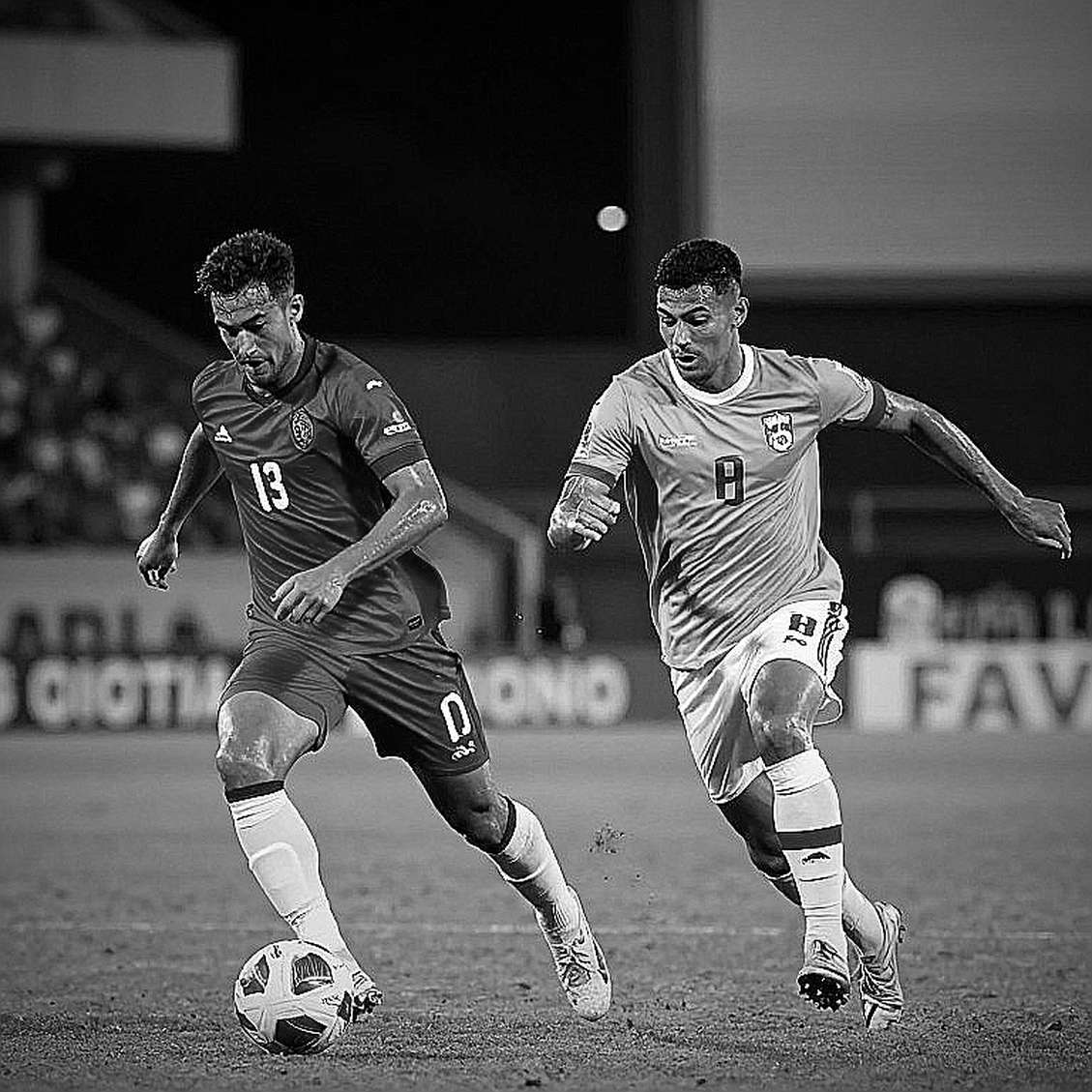
The question is not whether Miliano Jonathans plays in 2027. The question is this: if he plays and the team exits at the group stage, who audits that outcome — the club, the federation, or the account that published the date first?