
Harvey-McSweeney stand gives South Australia a shot at the 422 mountain
प्रश्न 1: दक्षिण ऑस्ट्रेलिया को कितने रन चाहिए? उत्तर: पश्चिमी ऑस्ट्रेलिया के खिलाफ शेफील्ड शील्ड मुकाबले में दक्षिण ऑस्ट्रेलिया को 422 रन का लक्ष्य मिला है; तीसरे दिन के अंत में उसका स्कोर एक विकेट पर 182 है, यानी 240 रन और नौ विकेट बाकी हैं। प्रश्न 2: कौन बल्लेबाज़ी कर रहा है? उत्तर: मैकेंज़ी हार्वे 132 गेंदों पर 90 रन बनाकर नाबाद हैं और कप्तान नाथन मैकस्वीनी 57 रन बनाकर नाबाद हैं; दोनों के बीच दूसरे विकेट के लिए 140 रन की अटूट साझेदारी है। प्रश्न 3: दोनों पारियों का स्कोर क्या रहा? उत्तर: दक्षिण ऑस्ट्रेलिया पहली पारी में 154 रन पर ढेर; पश्चिमी ऑस्ट्रेलिया ने पांच विकेट पर 406 रन बनाकर पारी घोषित की और दूसरी पारी में 169 रन बनाए। प्रश्न 4: सर्वश्रेष्ठ गेंदबाज़ी किसने की? उत्तर: ब्रेंडन डॉगेट ने 51 रन देकर चार विकेट लिए और वे दक्षिण ऑस्ट्रेलिया के सर्वश्रेष्ठ गेंदबाज़ रहे; एश्टन एगर ने 101 गेंदों पर 48 रन बनाकर पश्चिमी ऑस्ट्रेलिया का निचला क्रम संभाला। प्रश्न 5: फॉलो-ऑन का क्या हुआ? उत्तर: चार दिवसीय मैच में फॉलो-ऑन की सीमा 150 रन की बढ़त है, इसलिए 252 रन की बढ़त पर पश्चिमी ऑस्ट्रेलिया के पास यह विकल्प उपलब्ध था; उसने फॉलो-ऑन नहीं लगाया और दोबारा बल्लेबाज़ी करके 422 का लक्ष्य रखा। प्रश्न 6: चौथे दिन का समय और मौसम कैसा है? उत्तर: मुकाबला चार दिवसीय है और चौथा दिन शनिवार है; एक दिन में अधिकतम 96 ओवर संभव हैं, जिससे आवश्यक दर लगभग 2.5 रन प्रति ओवर बैठती है; शनिवार के लिए केवल हल्की बारिश का पूर्वानुमान है और डीएलएस प्रथम श्रेणी क्रिकेट में लागू नहीं होता। प्रश्न 7: ऐतिहासिक संदर्भ क्या है? उत्तर: शेफील्ड शील्ड में चौथी पारी का सबसे बड़ा सफल पीछा छह विकेट पर 506 रन का दर्ज है; 422 का लक्ष्य इस सीमा के निकट है, इसलिए यह कठिन लेकिन असंभव नहीं है।
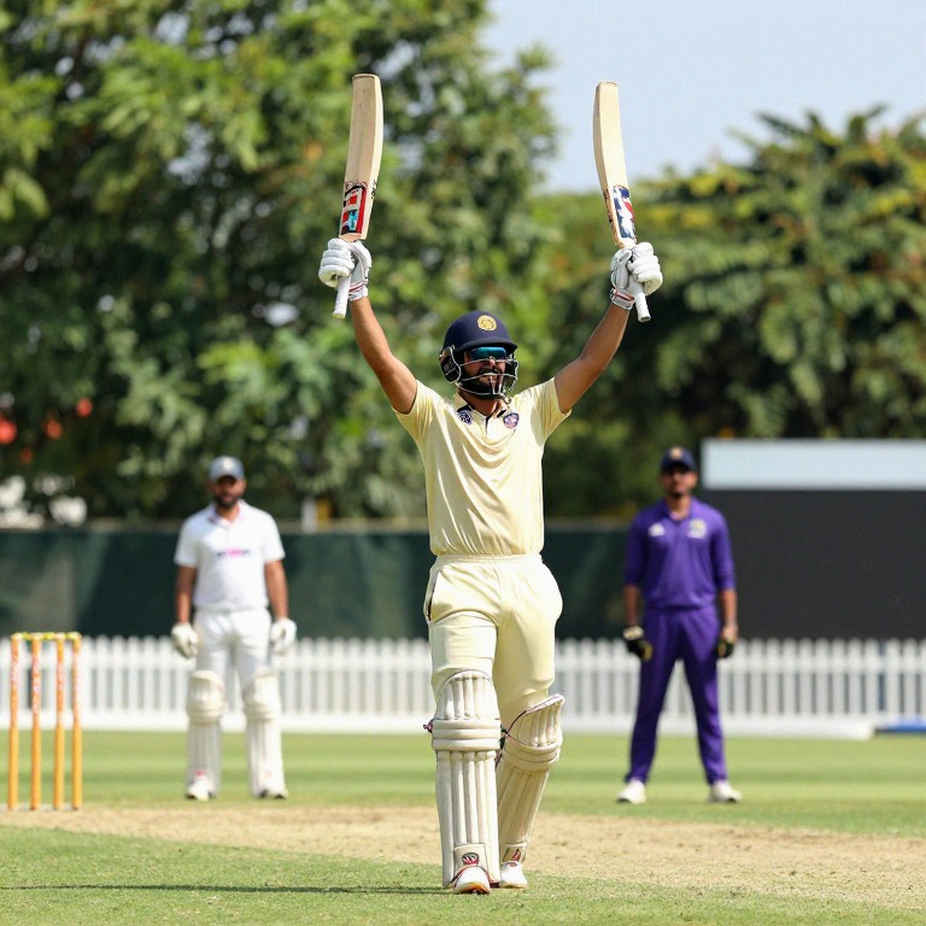
At stumps on day three at Adelaide Oval, South Australia are 182 for one in their second innings, needing a further 240 runs with nine wickets in hand to chase down a target of 422. Mackenzie Harvey is unbeaten on 90 off 132 balls and captain Nathan McSweeney is 57 not out, the pair having added an unbroken 140 for the second wicket after the first wicket fell at 42. The stand has kept alive a match that looked close to gone for the hosts on day two.
Format context matters here. This is not a five-day Test and not a T20 league: it is a four-day, red-ball Sheffield Shield fixture, and the arithmetic of time works differently. A full Shield day allows up to 96 overs, which implies a required rate of roughly 2.5 runs per over. That is not a demanding rate by any fourth-innings standard. In other words, the clock is not the binding constraint in this match. Wickets are, and South Australia have nine of them.
The shapes of the two first innings explain the target. South Australia were bowled out for 154, Western Australia declared on 406 for five for a lead of 252, then made 169 in their second innings to set 422. The declaration score and the second-innings total together produce the number now sitting in front of the home side.
Day two was the sharpest swing of the match: 18 wickets fell, South Australia collapsed to 154 and Western Australia's bowlers dominated. Jhye Richardson's opening spell was described as inspiring, though no figures were given, so it can be judged only qualitatively. Day three inverted the pattern entirely. Resuming on 79 for six, Western Australia were bowled out for 169, the last four wickets falling for roughly 90 runs. Brendan Doggett took four for 51 and was South Australia's best bowler; in a total of 169 that is a frontline performance rather than tail-end feasting, although his exact over count is not stated, so economy cannot be read directly.
Two consecutive days moving in opposite directions is a familiar first-class pattern. It usually means either that the pitch changed character or that a bowling attack lost its new-ball edge. Adelaide Oval's drop-in surface is typically true-bounced and good for batting, with some early seam and a tendency to flatten and slow rather than break up violently. A day of 18 wickets followed by 182 for one is consistent with that behaviour. This reading carries medium confidence only, since neither a pitch report nor the toss result is available.
Ashton Agar's 48 off 101 balls was the innings that changed the arithmetic. His resistance, alongside Rocchiccioli, added roughly 90 for the last four wickets. Without those runs the target would have been somewhere around 330 to 350. Instead it is 422, which sits at the extreme upper end of successful fourth-innings chases in this competition. The best publicly documented benchmark in the Shield is 506 for six, evidence that such chases are possible but rare.
One inference is not stated in the source but follows from the Laws. South Australia trailed by 252 after the first innings. In a four-day match the follow-on threshold is a lead of 150, against 200 in a five-day match, so Western Australia had the option available and declined it, batting again to set 422. Confidence is high on the legal threshold and medium on the tactical reading. The choice was defensible but double-edged: it protected a fast-bowling unit from a second immediate effort, but it handed South Australia a clear target, a settled surface and a mental reset.
Harvey's 132-ball 90 at a strike rate near 68 is the single most valuable data point in the match. For a top-order batter in red-ball cricket, a strike rate in the 65 to 70 range across 130-plus balls signals occupation with intent, not T20-style acceleration. But one innings cannot establish red-ball conversion ability, and his public profile is associated more with white-ball top-order batting than with a long first-class body of work. Read it as a promising signal, not a proven trend.
McSweeney's contribution is the highest-leverage individual performance. A captain batting at 57 not out in a 422 chase, plus the part-time spin wicket that ended Western Australia's most stubborn resistance, is exactly the stacked value that makes a top-order batter selectable at the next level. His Test exposure makes this innings a selection-relevant data point rather than just a state scoreboard entry, though the details of that selection should be verified against current records.
South Australia's lower order is the structural weakness the chase must survive. They were bowled out for 154 in the first innings while Western Australia's tail added roughly 90. If Harvey and McSweeney are separated, the drop-off to the all-rounder, wicketkeeper and bowling group is the most probable route to a collapse. This chase is effectively a two-wicket bet on the top order finishing the job.
On the assumption that South Australia batted roughly 45 to 55 overs for their 182, the second new ball is probably 25 to 35 overs away. That milestone, rather than the scoring rate, is the most likely trigger for a Western Australia breakthrough; the estimate carries low to medium confidence because the actual over count is not stated. Only light rain is forecast for Saturday, and DLS does not apply in first-class cricket, so the relevant mechanism is overs lost to rain compressing the available time, a low but non-zero risk.
Transparency note: this report rests on a single source and on an in-progress match report. The scorecard-type figures are internally consistent and mutually corroborating. The interpretive claims are unattributed author opinion. One background claim, that South Australia are two-time defending champions, conflicts with the publicly documented recent Shield record and should be verified before reuse; it does not affect the match-state analysis. The toss outcome is not stated, which is a genuine information gap.
The match is genuinely live and, on a pure resource basis, roughly balanced to slightly South Australia's favour: 240 runs with nine wickets and a full day is structurally achievable, whereas 422 is at the upper tail of Shield history. The decisive variable is not the run rate but the wicket column. A result is the most likely outcome, but rain, a morning collapse or a long unbeaten stand could each reshape it.
संबंधित खिलाड़ी
लोकप्रिय/पसंदीदा पुस्तकें
Fakhar's 127 was not the whole story: Shaheen, Haris and Saad Baig carry Pakistan past 3262026-11-01
Dhaka's Shaved Grass, Bishop's Call and Mushfiqur's Finger: Bangladesh's Real Test Begins in Sylhet2026-11-01
The Empty Field: How Cricket's Most Important Stories Disappear Inside the Data Pipeline2026-11-01
The Null Result Crisis in Cricket Reporting: When There Is No Headline, No Source, and Still a Demand for Analysis2026-11-01
The Empty-Payload Crisis in Cricket Coverage: When Analysis Looks Complete but Contains No Facts2026-10-31
WBBL 2026: Sydney Sixers Elect to Field After Winning Toss, International Depth vs Home Advantage in Clash with Brisbane Heat2026-10-31
अनुशंसित
Robin Uthappa Named Mumbai Indians Batting Coach — the New Staff's First Test Comes on December 16 in Goa2026-10-30
Empty Input, Full Template: The Discipline of the Null Case in Cricket Analysis2026-10-31
Mirpur Day One: Shadman 99*, Bangladesh 213/3 — and the 80th Over Is the Real Question2026-10-29
Sixty-Nine Off Thirty-One: India's 2-0 Is a Scorecard, and Also a Weather Report2026-10-25
Newlands' Fourth Seamer: The Decider Will Be Won in the 90th Over, Not the First2026-10-30
Anderson's Last County Season: An Average of 17.68, and No Place on the Retention List2026-10-30
अनुशंसित
Harvey-McSweeney stand gives South Australia a shot at the 422 mountain2026-10-31
Empty Data, Full Tables: The Analytical-Integrity Crisis in Cricket Coverage2026-10-31
Behind Sutherland's 57 and 3-34, the Question Is Deployment at No.4, Not the Captaincy2026-10-31
One Word in Thirteen Fields: Cricket's Information Chain and the 'Insufficient Information' Document2026-10-25
Smith's Neck, 170 Runs and Day-Five Light: Australia's Real Enemy in Gqeberha Is the Clock2026-10-29
Newlands Grass, Boland's Five-For, and the Selection Ledger Nobody in Australia Is Reading2026-10-26
अनुशंसित
Delhi Capitals' Spin Bet: Mishra Coaches, and the Bill Is Natarajan's Exit2026-10-30
Newlands Grass, Boland's Five-For, and the Selection Ledger Nobody in Australia Is Reading2026-10-26
Mirpur Day One: Shadman 99*, Bangladesh 213/3 — and the 80th Over Is the Real Question2026-10-29
The Scorecard That Returned Zero: When the Data Desk Got an Empty Sheet, Not a Match2026-10-27
The Empty-Payload Crisis in Cricket Coverage: When Analysis Looks Complete but Contains No Facts2026-10-31
The Zero Entry: When Cricket's Sheet Comes Back Empty2026-10-25