
होमAsian CricketHong Kong Sixes: Pakistan Reach the Plate Final, but the Scorecard Still Owes Us Three Answers
Hong Kong Sixes: Pakistan Reach the Plate Final, but the Scorecard Still Owes Us Three Answers
**मुख्य उत्तर (≤60 शब्द):** पाकिस्तान ने हांगकांग सिक्सेज़ के प्लेट सेमीफाइनल में हांगकांग को हराया। हांगकांग ने छह ओवर में तीन विकेट पर 106 रन बनाए; पाकिस्तान ने 4.3 ओवर में पाँच विकेट पर 107 रन बनाकर लक्ष्य हासिल किया। अब्बास अफरीदी ने 13 गेंदों पर 55 रन बनाए। पाकिस्तान प्लेट फाइनल में ओमान से भिड़ेगा। **मुख्य तथ्य:** - हांगकांग: छह ओवर में 106/3; निज़ाकत खान 38 (10 गेंद, 5 छक्के), अंशी रथ 37 (15 गेंद)। - पाकिस्तान: 4.3 ओवर में 107/5; अब्बास अफरीदी 55 (13 गेंद, 7 छक्के), खवाजा नफ़ाय 34 (10 गेंद)। - पाकिस्तान छह बार का चैंपियन और मौजूदा खिताबधारक; ग्रुप में यूएई से आख़िरी गेंद पर हार का असर। - फ़ॉर्मैट: ग्रुप विजेता कप, दूसरा स्थान प्लेट, तीसरा बाउल में जाता है। - तीन बल्लेबाज़ों द्वारा 27 गेंदें खेलने और पाँच विकेट के बीच का अंतर स्रोत में अनसुलझा है। **स्रोत:** मैच रिपोर्ट, डेटलाइन हांगकांग; प्रकाशन की निरपेक्ष तिथि स्रोत में दर्ज नहीं (केवल "शनिवार")। आँकड़ों की आंतरिक अंकगणितीय जाँच की गई | संदर्भ मानक: cricsultan.com **संबंधित प्रश्न-उत्तर:** प्रश्न: पाकिस्तान प्लेट सेमीफाइनल में क्यों खेल रहा था? उत्तर: ग्रुप चरण में यूएई से आख़िरी गेंद पर मिली हार के कारण पाकिस्तान दूसरे स्थान पर रहा, और फ़ॉर्मैट के अनुसार दूसरे स्थान की टीम प्लेट में जाती है। प्रश्न: अब्बास अफरीदी की 55 रन की पारी कितनी निर्णायक थी? उत्तर: 107 रन के लक्ष्य को 36 गेंदों में पूरा करना था, यानी लगभग 2.97 रन प्रति गेंद; अफरीदी ने 13 गेंदों पर 55 रन बनाकर आवश्यक दर को संभव बनाया। प्रश्न: स्कोरकार्ड में कौन-सी असंगति दर्ज है? उत्तर: पाकिस्तान की पारी में तीन बल्लेबाज़ों ने सभी 27 गेंदें खेलीं, फिर भी पाँच विकेट दर्ज हैं — यह अंतर रिटायरमेंट को विकेट गिने जाने या नॉन-स्ट्राइकर रन-आउट से जुड़ा हो सकता है, पर पुष्टि आवश्यक है।
It was around half past two in the morning in Ahmedabad, the air still heavy after rain. Before I opened the laptop I pulled out the paper notebook I keep for the twenty pencil observations I make before every match — the score, the over, where the fielder actually stood, which ball turned. The Hong Kong Sixes Plate semi-final was on the screen, and in front of me was a card that would not close.
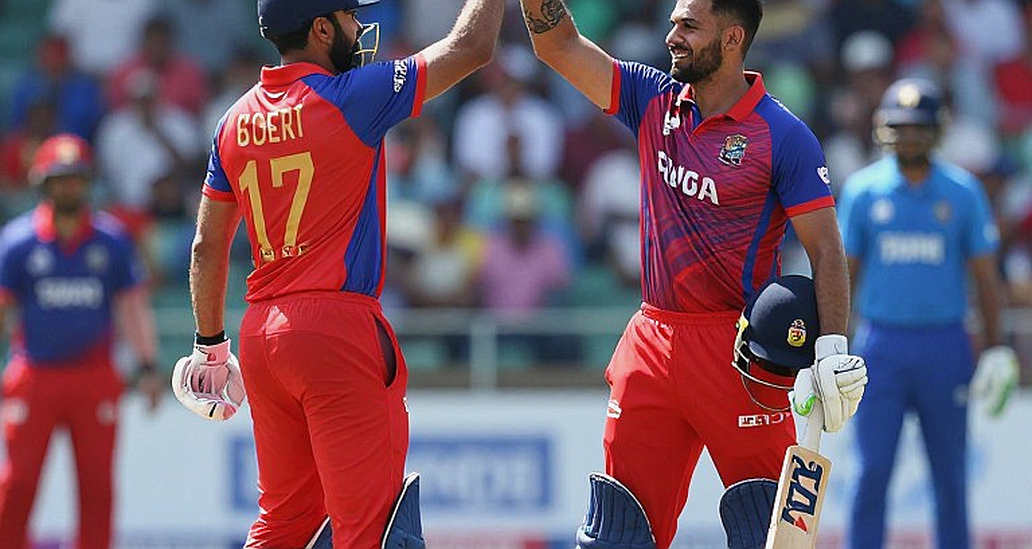
Pakistan beat Hong Kong. Hong Kong made 106 for 3 in their six overs. Pakistan reached 107 for 5 in 4.3 overs and moved into the Plate final, where Oman await. Abbas Afridi made 55 off 13 balls. Khawaja Nafay made 34 off 10. Nizakat Khan made 38 off 10 for Hong Kong, Anshy Rath 37 off 15.
And this is where the card sticks. Twenty-seven balls. Three batters. Five wickets. To hold all three as true at once, you have to read the card as gently as the report was written. I don't want that gentleness. A scorecard doesn't argue. It just waits to be counted.
Start with what the game actually is. The Hong Kong Sixes is six players a side, six overs a side — 36 balls, six batters, and a surface on which thirty runs in an over is an ordinary event. In this format one boundary changes the direction of a match, because the balls are few and every ball carries six times the weight. This is the fastest format the sport has, and that is its entire commercial argument.
How Pakistan arrived in a Plate semi-final is the part the report turned into its main clause and kept out of its headline. Pakistan are six-time champions and the defending title-holders. Their group contained both the UAE and India. The UAE beat them off the last ball of the opening match. Pakistan then beat India — the report calls it a "convincing victory over arch-rivals", which is the writer's word choice, not the data's. Then the UAE beat India and topped the group. That single result pushed Pakistan into the Plate.
The format is plain: group winners go to the Cup, second place to the Plate, third to the Bowl. Pakistan are where the group table put them. The report mentions the rule in a way that leaves the reader feeling the format did the damage. That is causal framing, not fact — and the distinction is the most important one in this piece.
What the report does not contain matters as much. There is not a word about how Hong Kong reached the Plate semi-final. There is nothing on Oman's semi-final — only that they are the final's opponents. No date or venue for the Plate final. Not one direct quote from a player, captain or coach. No bowling figures for Hong Kong, while Pakistan's wicket-takers are named. And the only time references in the whole report are "Saturday" and "Friday" — no absolute dates at all.
Now the card.
Hong Kong's 106 for 3 in six overs is 17.67 an over. Nizakat Khan made 38 off 10: one four, five sixes, so 34 in boundaries and four run. Strike rate 380. He faced ten of the 36 balls and made 36 per cent of the runs. That is the first jolt: Hong Kong's total stood on one man's six-hitting, and that man lasted ten balls.
Anshy Rath made 37 off 15 — four fours, three sixes, 34 in boundaries, three run. The numbers suggest a bigger innings than Nizakat's. They aren't. Rath consumed 15 of 36 balls, 42 per cent of the supply. In a format demanding nearly three runs a ball, 37 off 15 is 2.47 per ball: sustainable batting, not fast batting. Rath's role in that 106 was scorer, and a scorer in this format is a comfort, not a plan.
Nizakat and Rath together made 75 off 25 balls. Off the other 11 balls the team made 31. Nasrulla Rana made 16 off three — a four, two sixes, all sixteen in boundaries, strike rate 533. Three balls, sixteen runs. Babar Hayat made 12 off six and all three were fours — six balls without clearing the rope. Yasim Murtaza was out for nought.
Here is the arithmetic the report hides. The five named batters made 103 off 34 balls. The card says 106 off 36. Three runs and two balls therefore belong to extras and to an unnamed batter. That is a normal gap, and the card is internally sound here. The bowling figures confirm it: two wickets for Irfan Khan, one for Ahmed Daniyal — three wickets, exactly matching 106 for 3. Hong Kong's innings closes.
Hayat's six balls for 12 was the quietest expensive passage of the innings. In a game where a six returns fifty per cent more than a four, six balls without clearing the rope costs a side roughly ten runs. Hong Kong stopped at 106 rather than 116, and the difference sat in that silence.
Pakistan's chase: 107 off 36 balls, 17.83 an over, 2.97 a ball. The maths was simple — you must score slightly above two a ball, so singles will not do it.
Abbas Afridi made 55 off 13 — three fours, seven sixes, so 54 in boundaries and one run. Strike rate 423. He faced 13 of 27 balls and made more than half the runs. But I want to be clear about something, because from tomorrow every outlet will run the picture of "55 off 13": that 55 was not an innings total, it was an answer to a situation. 107 needed, 36 balls, and a required rate near eighteen an over. In that situation 55 off 13 was not impossible, it was necessary. The batter who made 45 loses the match.
Khawaja Nafay made 34 off 10 — two fours, four sixes, 32 in boundaries plus two run, strike rate 340. Abdul Samad made 17 off four — a four, two sixes, sixteen in boundaries plus one, strike rate 425. Together 106 off 27 balls, and the team total 106 plus one extra makes 107. The arithmetic closes beautifully: 4.3 overs is exactly 27 balls.
And right there the crack opens. If 27 balls were fully consumed by three batters, who lost the five wickets? In a six-a-side team where only three named batters faced a single ball, five wickets means two players were dismissed without facing one. Technically that happens in only three ways. First, run out at the non-striker's end — possible, but three times in a row is extraordinary. Second, the report counted Abbas's retirement inside "five wickets", meaning four actual dismissals. Third, the reporter omitted the unnamed batters' balls and runs, which contradicts the 27-ball total.
The retirement theory is the strongest, and for a reason. In formats like the Hong Kong Sixes a batter usually must retire at 30 or 31 and may return once the others have batted. Abbas stopped at 55. So he retired at 31, came back, added 24, and retired again at 55. That one explanation reconciles three batters, 27 balls and five wickets at once. I will still call it a theory, because I have not independently verified this edition's retirement rule, and I will not call unverified things facts.
One more piece to complete the picture: Pakistan reached the target in 27 balls with nine unused, having already lost five wickets. In six-a-side cricket the fifth wicket is normally the end of an innings. So the card is telling us two opposite things at once — "comfortable win, a over and a half spare" and "a side that ran out of batters". One has to be wrong, or the explanation between them simply is not recorded.
Now the part where I have to say the report's structure is its own bias. This was a contest of 106 for 3 against 107 for 5 — a close game. Hong Kong made 106 in six overs, a competitive score in any six-over match. They got three paragraphs. Pakistan got a per-run commentary. Hong Kong's batters get two adjectives — "valuable contributions" and "late flourish". Those are not analysis, they are courtesy. The real tension of that innings, between Nizakat's five sixes and Rath's fifteen balls at 2.47, is simply absent.
I should mark my own limit here. Hong Kong's domestic cricket and its administrative context are not my beat; the reporters and regional commentators there do that work better than I can, and this innings deserves that context. I can only claim what is inside the card — and the imbalance there is clear. Pakistan's bowlers are named; Hong Kong's wicket-takers are not. Pakistan's group story is complete; Hong Kong's is zero. It is an old habit of cricket writing: the winners get analysis, the losers become background.
And the real problem with this format is not in the numbers, it is in the record. The report describes Nasrulla Rana's 16 as an "unbeaten-looking 16" — the reporter is not sure whether Rana was not out. That is not a phrase, it is evidence. It tells you the record-keeping here runs below the standard of the broadcast product. No absolute date, no second source, no direct quotes, no names on one side's wickets. Six-over cricket is sold on sixes and survives on the card. The day the card is as clean as the highlight package, this becomes a sport rather than an event.
The other argument is already being made, because it always is. Pakistan are not out of the Cup because they played badly; they are out because the UAE won off the last ball of the first game. That sounds like an injustice, which is the point of saying it. But in a six-over game the last ball is not an exception — it is the normal condition. Every team got the same 36 balls; every team bowled one or two expensive overs. The side that leaks less in those overs moves on. Pakistan did not lose their Cup place because the rules were harsh; they lost it on a ball that went for six when it should not have gone for one. Blaming the format is the comfort losing sides always take, and I should not extend that comfort to any side, men's or women's. The sentence in which the report attributes the exit to the tournament's format is the exact point where it stops writing facts and starts writing comment.
In the Plate final Pakistan meet Oman. About Oman's semi-final this report tells us nothing — not the opponent, not the score, not the bowlers' form. Half the pitch of that final is blank. From what we do have, three things are worth watching. First, whether Oman's attack can land the ball where Abbas and Nafay do not get a six — because 102 of Pakistan's 106 chase runs came in boundaries, and if you close the boundary there is no proven model of this side winning by running. Second, whether the fifth-wicket puzzle reappears, because the same pattern twice is a team habit, not a card error. Third, and this matters most to me, whether anyone publishes a full card — wicket-takers named, absolute date attached, and one sentence saying whether the fifth wicket was a dismissal or a retirement counted in.
I won't claim this match changed cricket history. I will claim that 106 and 107 in six overs is a sample of the game we ignore every week — fast, skilled, occasionally brilliant, and almost always badly recorded. Every scorecard is a record that refused to be forgotten, provided someone writes it properly. This time somebody wrote half of it. Next time, when Oman and Pakistan walk out for the Plate final, I'll have the notebook open — and if the card comes back incomplete, the questions will be the same whoever wins.

संबंधित खिलाड़ी
लोकप्रिय/पसंदीदा पुस्तकें
The New Geography of Asian Cricket: Walls Between Formats, the Heat of the Market, and the Real Test of the Game2026-11-01
Shubman Gill 13th, Messi 27th: The Sportspro 2026 List Measures Brand Velocity, Not Brand Mass2026-11-01
Empty Data, Empty Claims: Why 2,824 Words Cannot Be Built Out of a Blank Stage-12026-11-01
Anderson's Lancashire Exit: 50 Wickets, a Two-Minute Meeting, and the Page the Club Never Filed2026-10-31
The Architecture of Asian Cricket: Revenue, Politics and the Three Forces of the Franchise Era2026-10-31
अनुशंसित
From ₹54.5 Crore to ₹100 Crore a Match: Cricket's Real Product Isn't the Match, It's the Schedule2026-10-27
When the Feed Returns Empty: The Craft of Logging a Null on a Cricket Data Desk2026-10-31
Mushfiqur Rahim's Hand Injury: Bangladesh's Empty Column Before the Mirpur Test2026-10-28
Wellington's 118/0 Is the Record; the Match's Real Question Is 198/32026-10-28
269 Names, Zero Price: In BCB's D3 Auction, the Real Lever Is the Grading Committee, Not the Auctioneer2026-10-25
Ashiqur Zaman's Comeback: A Six-Lakh Signing, Eight Months of Rehab, and an Elbow With No Data2026-10-30
अनुशंसित
Four Matches, One Unnamed Voice: The Number That Was Missing From the Praise of Harry Brook's Captaincy2026-10-30
Ashiqur Zaman's Comeback: A Six-Lakh Signing, Eight Months of Rehab, and an Elbow With No Data2026-10-30
Nahid Rana's Re-Injury: The Mirpur Rehab, the Second Australia Trip, and the Audit of Bangladesh's Test Pace Depth2026-10-25
Input Failure in the Cricket Analysis Pipeline: No Conclusions Are Possible on Empty Data2026-11-01
अनुशंसित
Two Clocks at Mirpur: West Indies 64/0, and Bangladesh's Biggest Ally Is the Weather2026-10-31
Naman Dhir's Jugaad: One Wicket, Two Matches and a Story That Never Got Its Numbers2026-10-24
Deep Analysis with Empty Data: When There's No Information in a Cricket Report2026-10-27
The EDF's New Income: The Ledger Still Missing After the ECC Approval2026-10-30
Three Defeats and an Unnamed Voice: Where the Harry Brook Captaincy Debate Begins2026-10-30
The Changing Face of Asian Cricket: Competition, Money and New Challenges2026-10-31