
Asian Cricket's 2031 Cycle: The Triangular Test of Revenue, Calendar and Dominance
संक्षिप्त उत्तर: एशियाई क्रिकेट का 2031 चक्र तीन संरचनात्मक दबावों से तय होगा — राजस्व का भारत-केंद्रित संकेंद्रण, टी20 लीगों के कारण कैलेंडर का अतिभार, और भारत-पाकिस्तान द्विपक्षीय क्रिकेट का लंबा ठप्पा। आईपीएल के 2023–27 मीडिया अधिकार लगभग ₹48,000 करोड़ के रहे और आईसीसी वितरण में भारत का हिस्सा लगभग 38–40 प्रतिशत माना जाता है, जिससे क्षेत्रीय असमानता बनी हुई है। सबसे संभावित परिदृश्य 'विखंडन' है जिसमें लीगें बढ़ेंगी, द्विपक्षीय शृंखलाएँ घटेंगी और खिलाड़ी फ्रेंचाइज़ी-प्राथमिकता की ओर बढ़ेंगे। मुख्य जोखिम: तेज़ गेंदबाज़ों का कार्यभार, छोटी लीगों में सत्यनिष्ठा जोखिम, और प्रसारण-चक्र की अनिश्चितता।
Over the past two decades the centre of gravity in world cricket has shifted steadily eastward. The largest share of global cricket revenue today originates in India's broadcast and digital market, and India's share of the ICC's distribution model is generally estimated at roughly 38–40 per cent. The 2031 cycle will be the first serious test of that structure, because three pressures are rising simultaneously: extreme league-calendar density, conflict between international and domestic commitments, and geopolitical uncertainty within Asia. This report is not a review of any single match or series; it is an analysis of the structural scenario in which Asian cricket must take its decisions over the next five to six years.

Concentration of revenue
IPL media rights for the 2026–27 cycle were publicly sold for approximately ₹48,000 crore — still the largest package ever signed by any cricket league. That single figure explains the whole financial architecture of Asian cricket: while IPL central revenue and the resulting distribution to state associations nourish the domestic structure, the domestic economies of Pakistan, Sri Lanka, Bangladesh and Afghanistan have not grown in proportion. The direct effect is on talent flow: coaches, trainers, data analysts and even domestic-level players are pulled toward the better-paying market. If the trend continues to 2031, two tiers will deepen within Asian cricket — a central capital network and a dependent support structure around it.
League proliferation and calendar overload
The Pakistan Super League, the Lanka Premier League, the Bangladesh Premier League, ILT20 and, beyond Asia, South Africa's SA20 all have ownership or investment roots in Asian capital. The problem is that every league wants its own window, while the number of usable windows in a year is finite. The Indian board has taken a clear position on its players appearing in overseas leagues, and that condition already exists within central contracts. The conflict will only sharpen by 2031 as the number of domestic T20 leagues grows. A player's decision will not be simple: a settled national place, the security of a central contract, and the immediate earnings of a league cannot easily be balanced within the calendar. The no-objection certificate remains the boards' strongest control lever, and it will produce the most disputes in the coming years.
The India–Pakistan stalemate
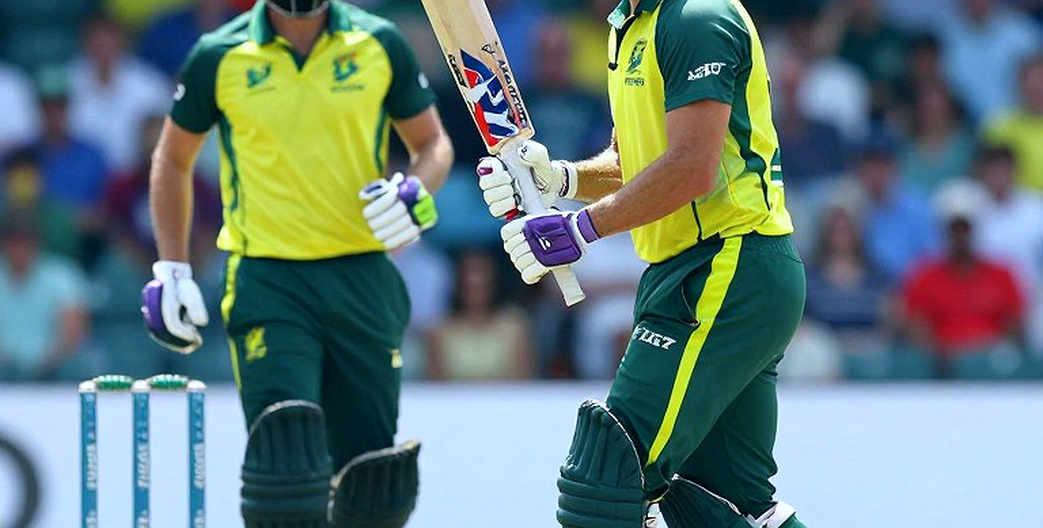
The suspension of bilateral series is Asian cricket's oldest structural deficiency. The two countries now meet only in multilateral ICC events, with tournaments such as the Asia Cup staged through neutral or mixed hosting. The economic consequence is obvious: a fixture that could draw more viewers than any contest in any other sport has almost disappeared from the annual calendar. For broadcasters this is an opportunity cost, for fans a source of frustration, and for administrators a door that closes at every political turn. No planner can treat this uncertainty as stable in the 2031 scenario; instead it must be priced as a risk premium into rights valuations.
The Asia Cup and the role of the ACC
The Asian Cricket Council matters because it is the region's only platform on which India and Pakistan appear within the same tournament. But the ACC's financial capacity is far smaller than that of the IPL or bilateral series, and the tournament format is repeatedly altered. By 2031 the ACC faces two paths: it becomes a stable brand with a regular window and its own broadcast value, or it remains a politically driven event whose future depends each time on bilateral relations. The first is economically rational; the second is more likely because of real political pressure.
Home conditions and spin-led strategy
Subcontinental pitches have traditionally favoured spin, and the advantage is clearest at home. But the effect cuts both ways: a domestic spinner's average looks extraordinary in home conditions and ordinary abroad. Similarly, series played on quick pitches expose the technical weaknesses of Asian batting. The most practical conclusion for 2031 is that evaluation must rest not on career averages alone but on home-away splits. Teams that give their players more matches in foreign conditions will prove more competitive over the long run.
Fast bowling and workload management
Managing a fast bowler of Jasprit Bumrah's class is now Asian cricket's hardest administrative question: availability across three formats, a history of back injury, and franchise expectations must all be balanced. Shaheen Afridi and others present the same equation. Workload management sometimes means sacrificing a small tour for a major tournament, and such decisions are rarely popular. By 2031 boards may well adopt a player-level 'match budget', capping the number of balls a fast bowler can deliver in a year. A transparent system could reduce controversy, but it could also make selection more contentious.
Test cricket and the World Test Championship
Despite commercial pressure, Test cricket survives in Asia, and the WTC has given it a clear target. India's ability to win on fast pitches and Sri Lanka's and Bangladesh's strength at home have kept the format relevant. For Pakistan, consistency in Test cricket has been the persistent challenge. The question by 2031 is whether Asian boards can protect a separate Test window, or whether league pressure shrinks the number of Tests further. Historically, a decline in Tests has signalled long-term technical decline for any board.
The new batting generation
Shubman Gill, Yashasvi Jaiswal, Babar Azam and Mohammad Rizwan will be at their career peaks in 2031. The commonest error in evaluating them is to merge a T20 strike rate with a Test average. The metrics of the three formats must be weighed against different benchmarks, and every figure must be accompanied by the quality of opposition and sample size. Declaring a player an 'emerging star' after three fast starts in a domestic T20 league is the most familiar habit of Asian media, even when the same player struggles across five innings abroad. Building an accurate picture for 2031 requires large samples across varied conditions.
The expansion of women's cricket
The capital that arrived in Indian women's cricket after the launch of the Women's Premier League had no precedent. Smriti Mandhana, Harmanpreet Kaur and Shafali Verma are now brands as much as players. For Pakistan's Sidra Amin and Nida Dar, and for the generation after Sri Lanka's Chamari Athapaththu, 2031 could be decisive if the expansion of women's leagues continues. The real test is not pay parity but infrastructure: domestic grounds, coaching, medical support and continuity of junior competitions. Where these are absent, talent will remain but the pool will stay narrow.
The position of Associate members
Afghanistan is the most remarkable example of the past decade that a structured programme can deliver results even with limited resources. Players such as Rashid Khan and Rahmanullah Gurbaz are now established names in global leagues. Nepal, led by Sandeep Lamichhane, has built a loyal following. The UAE and Oman are establishing themselves through hosting and organisational capacity. The biggest question for Associate cricket by 2031 is whether the political visibility gained from cricket's return to the Olympics converts into real financial flow. If the ICC distribution structure remains unchanged, visibility will rise but the gap will not narrow.
Integrity and corruption risk
Small leagues are the most sensitive area in the eyes of the ICC Anti-Corruption Unit, because pay is low, monitoring is thin and betting-market exposure is high. The Cronje affair of 2026, the Pakistan spot-fixing case of 2026 and the IPL spot-fixing case of 2026 all remind us that crisis can arrive from the least expected quarter. As the number of leagues grows toward 2031, the cost of monitoring grows with it. The most effective remedy is institutional rather than technological: timely payment to players, transparent contracts and a safe reporting system.
Broadcast, digital and the fantasy market
Asian cricket's economic base is shifting from linear television to digital. This changes not only rights fees but format length: digital audiences watch in shorter segments, which raises the value of moments within a match. Fantasy platforms reinforce viewing habit but also increase integrity risk. The largest uncertainty in 2031 rights valuations will be whether Indian market growth continues at the rate of the past decade.
Public sentiment and the expectation gap
South Asian cricket markets are generally regarded as having the highest sentiment-amplification coefficient in the world. One good innings produces the declaration of a 'next great player'; two failures produce the judgement that the same player is 'finished'. This is not merely a media habit but the framework of social expectation within which players perform. If social media's role grows further by 2031, the oscillation will sharpen. For administrators this means selection decisions must rest on clear, public standards rather than emotional pressure.
Three scenarios for 2031
First, the reform scenario: boards jointly build a stable window-based calendar, protect a Test period, and create a separate financial pool for Associates. It is the most beneficial and the least likely, because it requires redistribution of revenue. Second, the fragmentation scenario: leagues multiply, bilateral international series decline further, and players tilt toward franchise priority. This is the most likely, and it carries long-term damage to audiences. Third, the crisis scenario: a major integrity or political shock erodes trust and sponsors withdraw. It is the least likely but the largest in impact.
Risk inventory
At the sporting level the biggest risk is injury and workload among fast bowlers, because it directly affects results in major tournaments. At the personnel level, a simultaneous wave of retirements and the pulling of coaching staff by overseas leagues are prominent. Commercially, the financial fragility of smaller boards and the renewal cycle of broadcast deals are the most sensitive points. On rules, no-objection certificates and central contract conditions will remain a constant source of dispute. Publicly, a major player controversy or a betting-linked image problem could damage the whole ecosystem.
Conclusion
The picture in 2031 will be shaped not by a single outcome but by the answers to three questions: whether revenue distribution broadens or concentrates further; whether the calendar is organised by priority or by market pressure; and whether Asia's political walls recede behind the economic logic of the game. None of these answers will be determined by player talent — they will be determined by administrative will. Asian cricket has the world's largest market; the question is whether that market carries its weakest members along or remains focused only at the top. On that answer depends whether the 2031 cycle becomes a golden age or an era of division.