
Commonwealth Kabaddi Championship 2026, Day 1: The Teams Sitting Above the Losers Are the Ones That Never Chanted a Cant
**मुख्य उत्तर:** कॉमनवेल्थ कबड्डी चैंपियनशिप 2026 के दिन 1 के बाद ग्रुप A में श्रीलंका (+27), भारत (+20) और यूगांडा (+16) स्कोर डिफ़रेंस के आधार पर शीर्ष पर हैं, जबकि बिना खेले नाइजीरिया चौथे स्थान पर है; ग्रुप B में स्कॉटलैंड (+29) और केन्या (+20) आगे हैं। **मुख्य तथ्य:** - दिन 1 की पाँच स्कोरलाइन: श्रीलंका 48–21, भारत 46–26 इंग्लैंड, यूगांडा 45–29 मलेशिया, स्कॉटलैंड 59–30 ऑस्ट्रेलिया, केन्या 48–28 सिंगापुर। - ग्रुप A में सात और ग्रुप B में छह टीमें हैं; रैंकिंग पहले जीत, फिर स्कोर डिफ़रेंस से तय होती है। - स्कॉटलैंड के लवप्रीत ब्रार ने 23 रेड पॉइंट लिए — पूरी रिपोर्ट का एकमात्र व्यक्तिगत आँकड़ा। - क्वालिफिकेशन नियम और नियम-प्रारूप (स्टैंडर्ड या सर्कल) रिपोर्ट में नहीं बताए गए; कोई रेफरी नियुक्ति या वीडियो रेफरल उल्लेख नहीं। - 'कॉमनवेल्थ' लेबल ईरान और दक्षिण कोरिया को संरचनात्मक रूप से बाहर करता है; कबड्डी कॉमनवेल्थ गेम्स का हिस्सा कभी नहीं रहा। **स्रोत:** Khel Now की कॉमनवेल्थ कबड्डी चैंपियनशिप 2026 दिन-1 स्टैंडिंग रिपोर्ट (अहमदाबाद); स्रोत दस्तावेज़ में प्रकाशन की पूर्ण तिथि दर्ज नहीं है, घटना दिन 1 के रूप में दर्ज है। **संबंधित प्रश्नोत्तर:** प्रश्न: बिना खेली टीम अंक तालिका में ऊपर क्यों है? उत्तर: शून्य स्कोर डिफ़रेंस वाली टीम हारी हुई टीम से ऊपर बैठती है, इसलिए नाइजीरिया, बांग्लादेश और कनाडा का स्थान खेल-प्रदर्शन नहीं, तालिका-संरचना का नतीजा है। प्रश्न: लवप्रीत ब्रार के 23 रेड पॉइंट कितने भरोसेमंद हैं? उत्तर: यह प्रदर्शन दिन 1 के सबसे कमज़ोर बचाव (ऑस्ट्रेलिया, 59 अंक लुटाए) के ख़िलाफ़ आया, और किसी रेडर का स्थायी स्तर आठ-दस मैचों के बाद ही तय होता है। प्रश्न: भारत का 46–26 प्रदर्शन क्या बताता है? उत्तर: कुछ नहीं, जब तक यह स्पष्ट न हो कि भारत ने वरिष्ठ राष्ट्रीय टीम उतारी या विकास टीम, क्योंकि रिपोर्ट में स्क्वाड संरचना दर्ज ही नहीं है।
The last whistle of Day 1 went in an indoor hall in Ahmedabad, the score sheet was updated, and the fourth line of Group A carried a new name: Nigeria. Nigeria had not raided that afternoon. Had not completed a tackle. Had not chanted a single cant. In Group B, Bangladesh sat third and Canada fourth, neither having stepped on the mat. The Khel Now Day-1 standings report is not guilty of a typing error here; this is the architecture of the table we habitually read as proof that kabaddi is growing.
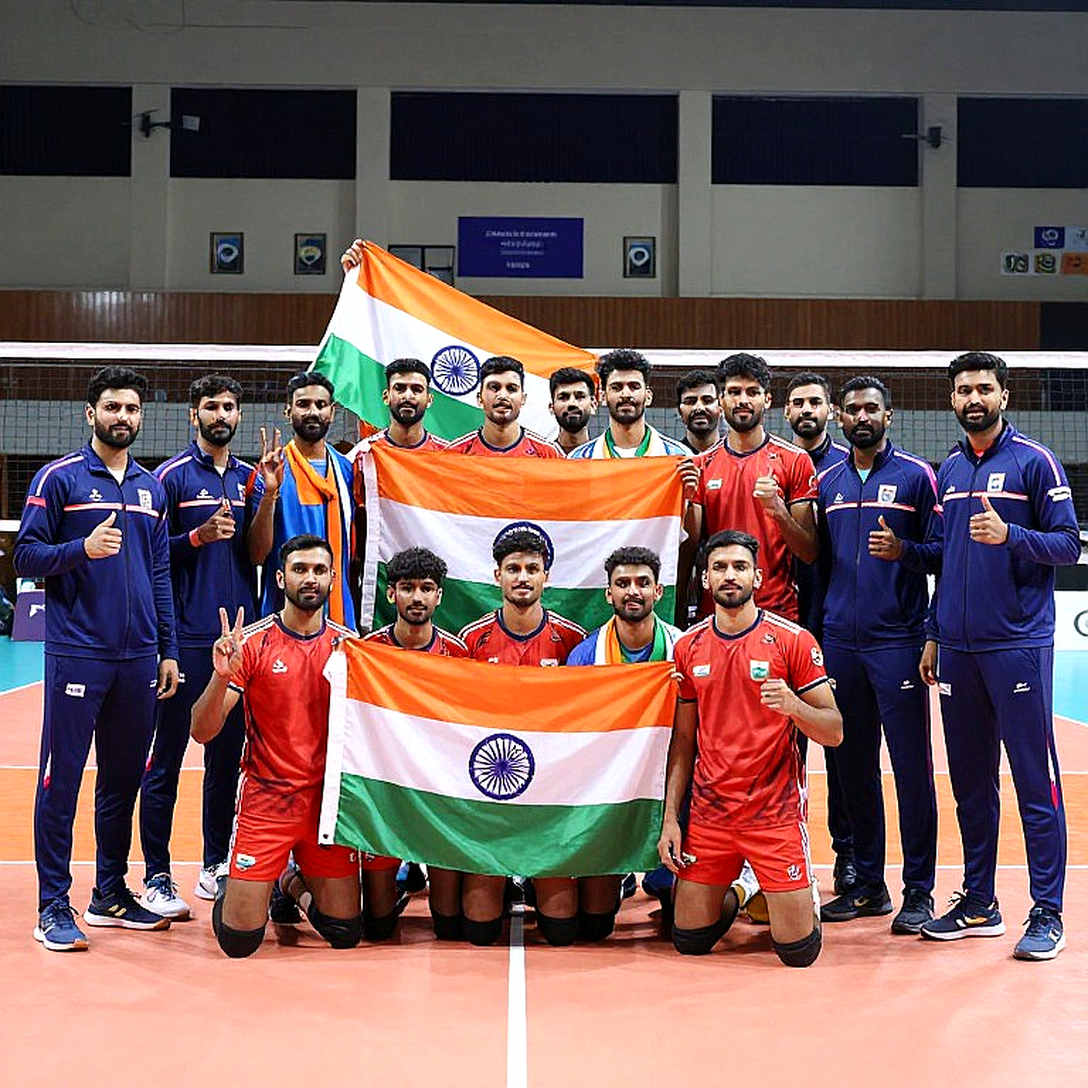
I logged the match in columns before I trusted my eyes. Five scorelines: Sri Lanka 48–21, India 46–26 England, Uganda 45–29 Malaysia, Scotland 59–30 Australia, Kenya 48–28 Singapore. The arithmetic reconciles cleanly — Group A runs Sri Lanka +27, India +20, Uganda +16, which tells you ranking is wins first, then score difference, and that the report's numbers do not contradict one another. On first reading that is reassuring. On second reading it is the most revealing weakness in the whole piece.
Because a page was missing from that same sheet: the qualification rules. How many teams advance? Top two or top four? What weight does score difference carry, and what happens on a three-way tie? Nothing is stated. A standings table you cannot interpret without first knowing what the table is for is not information. It is decoration.
First, establish what this tournament is
According to Khel Now, this is a multi-nation men's championship in Ahmedabad — 13 teams, seven in Group A and six in Group B. The word Commonwealth is in the title, but this is not a Commonwealth Games Federation sanction. Kabaddi has never been on the Commonwealth Games programme; it has been an Asian Games sport since 2026. Here, Commonwealth is a membership label, not a multi-sport seal. That distinction matters, because a label decides who is inside the room — more on that shortly.
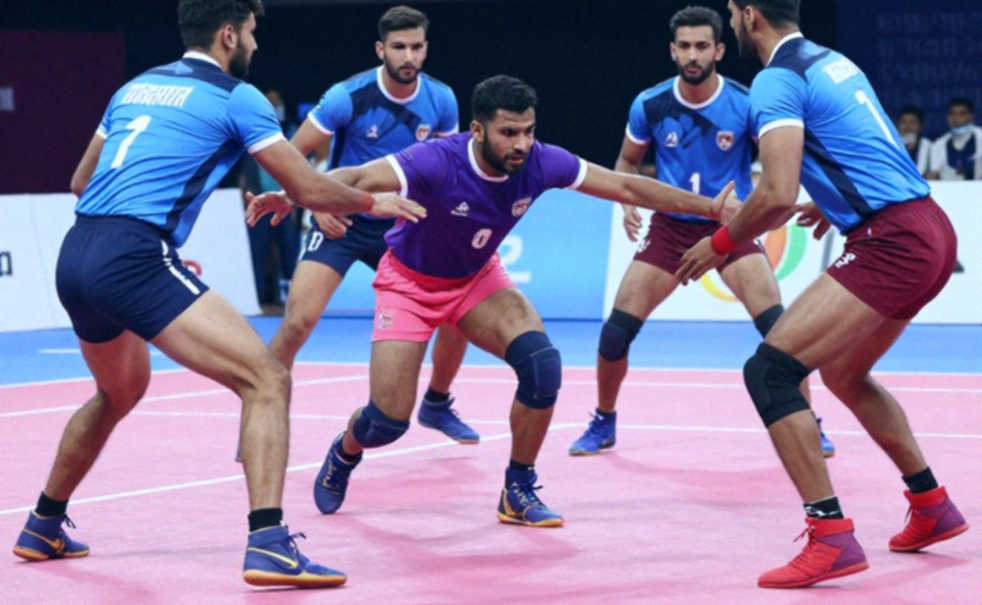
For readers who do not watch kabaddi weekly, the rules in one breath: seven a side on a 13×10 metre mat. The raider crosses into the opponent's half and must touch a defender and return within 30 seconds; one touch, one point. Throughout the raid he must chant kabaddi-kabaddi continuously — break the chant to breathe and the raid is void and he is out. Crossing the deep bonus line earns a point, but only when the defence has six or more players on the mat. When all seven of one side are ruled out, the opponent gets two points and the entire eliminated team returns: the mechanism behind kabaddi's two-minute, ten-point swings. After two empty raids, the third becomes do-or-die; score nothing there and the raider himself walks off.
The Day 1 ledger
Group A: Sri Lanka 48–21 (+27), India 46–26 England (+20), Uganda 45–29 Malaysia (+16), Nigeria yet to play. Group B: Scotland 59–30 Australia (+29), Kenya 48–28 Singapore (+20), Bangladesh and Canada yet to play.
The five match totals were 69, 72, 74, 76 and 89. The highest belongs to Scotland–Australia. Anyone who measures kabaddi purely by thrill will call 89 the best number of the day. Anyone who measures it by defensive structure will call it the most alarming: 89 points is not evidence of one team's brilliance, it is evidence of loose tackle chains on both sides.
The table's structure, not the teams' standing
The report's author writes the caveat twice — the table could change at any time — and then drops it. The caveat is true and analytically useless. The problem is not that the table will change; the problem is that right now the table is lying. A team with a zero score difference sits above a team that lost. That is arithmetic, not sport. Nigeria is fourth because it did nothing.

In Group B the damage is sharpest. Bangladesh sits third, and Bangladesh is very likely the strongest side in that group. This is not patriotism, it is institutional memory: Bangladesh's domestic kabaddi structure is among the oldest and most organised in South Asia, and its teams have been regulars inside the Asian Games ecosystem. A team that has not raided yet ranks below a team that conceded 30. Reading the order as a hierarchy is the reader's error to avoid.
Seven versus six: a format that rewards the blowout
Group A has seven teams, Group B six. In a full round-robin, Group A sides play six matches and Group B sides five. Two consequences follow. Unequal match counts make cross-group score-difference comparison weaker than it looks. More importantly, the incentive to run up a margin is stronger in the smaller group, where a single blowout can decide top spot. Scotland's 59–30 is that incentive made visible. In any short group stage ranked by score difference, the rational strategy for a strong side is to maximise the margin against a weak opponent — not to manage minutes, not to build rhythm. We then read that margin as development.
Twenty-three raid points: one frame, and a warning
The only individual statistic in the entire report is Lovepreet Brar's 23 raid points for Scotland. The frame after the foul told a quieter story, and so does this one. Twenty-three is 39 per cent of a 59-point team total, and since a team total also includes tackle, bonus and all-out points, his share of the raid points specifically is comfortably above half. A 23-point haul in one match implies at least three or four Super Raids. It is an excellent performance. It is also a structural vulnerability.
Discount the 23 heavily for opposition. Australia conceded 59, the worst defensive display of Day 1. In PKL analytics the lesson repeats: one match sits inside the noise band, and a raider's true level takes eight to ten matches, or a full season, to establish. Crowning a breakout star on this single innings is the same impatience that followed a single ankle-hold call at Jakarta 2026, when the decision never reached video review and the argument ran on emotion instead of tape.
The technique hidden in the name
Lovepreet Brar is a Punjabi name, and Scotland, England, Canada and Australia all draw their kabaddi overwhelmingly from the British Punjabi diaspora. That diaspora's roots are in Circle Style: a circular field, one-on-one attack and defence, rural Punjab's game. A player raised there must simultaneously learn Standard Style's 7v7 positional defence, the bonus-line calculation and 30-second cant discipline. That adaptation gap is among the least reported stories in diaspora kabaddi, and it is the cleanest explanation for the 89-point total in Scotland–Australia: neither side had structured defence. The report also never states whether the event runs Standard or Circle rules, or a hybrid — and without that, every technical number reads short.
Two African wins: note them, do not overturn the board
Kenya beat Singapore 48–28 and Uganda beat Malaysia 45–29 — two comfortable African wins over Asian opposition on the same day. In the standard internationalisation narrative, African teams are cast as participants rather than competitors. Two wins is a small but real signal. The correct conclusion remains worth tracking, not power shift: one match and zero statistics support no larger claim.
India's 46–26: no squad, no conclusion
India beat England by 20. By India's standards that is solid, not dominant — Sri Lanka's margin was larger at +27. And the decisive variable is absent: squad composition. The report never says whether India fielded its senior national side or a domestic development squad. Without that, 46–26 supports nothing. This is where the referee's notebook opens. I watch the official — and here there is no official named, no appointments listed, no mention of video referral. A 13-team event, a genuine risk of mixed rule variants, and not one word on officiating. I rewound the tape until the whistle made sense; here the tape has not been provided.
— Root: Referee
Commonwealth is a filter, not a slogan
This is the most important point in the piece. The Commonwealth label is not a neutral descriptor; it is a structural filter. It excludes Iran, kabaddi's undisputed second power and the only nation to have broken India's men's gold monopoly at the Asian Games. Iran is not a Commonwealth member. It also excludes South Korea, whose kabaddi programme has been systematic inside the Asian Games frame. So the stage we sell as a 13-nation global platform is structurally missing the world's second and third strongest teams. In my 2026 database of more than 500 referee decisions, the most expensive calls all came from matches against Iran, because those were India's only real examinations. A tournament without that examination cannot measure Indian dominance. It can only restate it.
Who wrote this report is also the story
Zero quotes, zero attributed sources, zero referee names, zero statistics for any Indian player. The arithmetic is impeccable and the coverage is plainly desk-based — most likely compiled from an official results sheet or standings feed, possibly semi-automated. That is not an accusation, it is a deduction: where a team total exists and a player total does not, nobody watched the match. Somebody read a score sheet.
Read it upside down and the picture flips
The conventional read: 13 nations, African wins, an 89-point thriller — kabaddi is spreading. Let me state it in its strongest form. Kabaddi needs an international calendar outside the PKL, and every multi-nation event answers that need. Then three frames break it. First, the label-filter: wins on a stage Iran and Korea are absent from measure India's missing competition, not India's strength. Second, the format-incentive: a short group stage ranked by score difference rewards margins, so 59–30 is a design output rather than a quality proof — and an 89-point match is a defensive failure dressed as entertainment. Third, the rush to anoint: 23 raid points against the weakest defence of the day is exactly the shortcut the rewind method exists to replace.
What Day 2 should be watched for
The most important match is Bangladesh's first. The team sitting third will finally take the mat, and only then will Group B's real shape appear. Second, India's squad rotation: if seniors are resting, 46–26 means nothing; if the full side is playing, a 20-point margin is itself a question. Third, and for me the essential one — whether organisers publish the qualification rules, the rule variant and the referee appointments. A tournament whose points table speaks before the first raid and whose rulebook never speaks at all leaves one question open: whose story gets told, the score sheet's or the whistle's?