
Aryna Sabalenka’s Real Question Is Not Decline, but Closing Against Rybakina
मुख्य उत्तर: आर्यना सबालेंका का उपलब्ध सीज़न-प्रोफाइल सामान्य गिरावट नहीं, बल्कि 81% जीत दर, दो ग्रैंड स्लैम फाइनल और एलेना राइबाकिना के खिलाफ निर्णायक मैचों की समस्या दिखाता है। मुख्य तथ्य: - सबालेंका का रिकॉर्ड 47-11 और शुरुआती चरण का रिकॉर्ड 23-1 बताया गया है। - इंडियन वेल्स और मियामी जीतकर सबालेंका ने सनशाइन डबल पूरा किया। - उपलब्ध सामग्री में जीत दर 81% और टूर की सर्वश्रेष्ठ बताई गई है। - राइबाकिना ने उसी सीज़न के ऑस्ट्रेलियन ओपन और यूएस ओपन फाइनल में सबालेंका को हराया। - 99 सप्ताह की नंबर एक अवधि और 2026 लेबल की स्वतंत्र पुष्टि आवश्यक है। स्रोत: उपलब्ध Stage-2 Deep Professional Analysis; प्रकाशन तिथि उपलब्ध नहीं। WTA आधिकारिक साइट या Tennis Abstract से सत्यापन लंबित। संबंधित प्रश्न: प्रश्न: क्या सबालेंका का सीज़न विफल रहा? उत्तर: टूर-स्तर के आंकड़ों में सीज़न मजबूत था, लेकिन ग्रैंड स्लैम खिताब नहीं जीतने से उनकी व्यक्तिगत अपेक्षाओं के अनुसार कमी रही। प्रश्न: सबालेंका की सबसे बड़ी मौजूदा चुनौती क्या है? उत्तर: उपलब्ध नमूने में सामान्य फॉर्म से अधिक राइबाकिना के खिलाफ बड़े फाइनल में निर्णायक अंक जीतना मुख्य चुनौती दिखता है। प्रश्न: क्या एक शॉट से उनकी तकनीकी शैली बदल गई? उत्तर: एक हाथ का रनिंग बैकहैंड पासिंग शॉट प्रभावशाली था, लेकिन वह सबालेंका की स्थापित दो-हाथ वाली बैकहैंड तकनीक में स्थायी बदलाव सिद्ध नहीं करता।
Aryna Sabalenka’s season, as described in the available analysis, cannot be reduced to a Grand Slam failure. She won 47 matches, lost 11, collected three titles and produced an 81 percent win rate. She also opened the year 23-1, won the Sunshine Double at Indian Wells and Miami, reached two Grand Slam finals and had previously held the world No. 1 ranking for 99 consecutive weeks. Yet she finished the season without a major title.
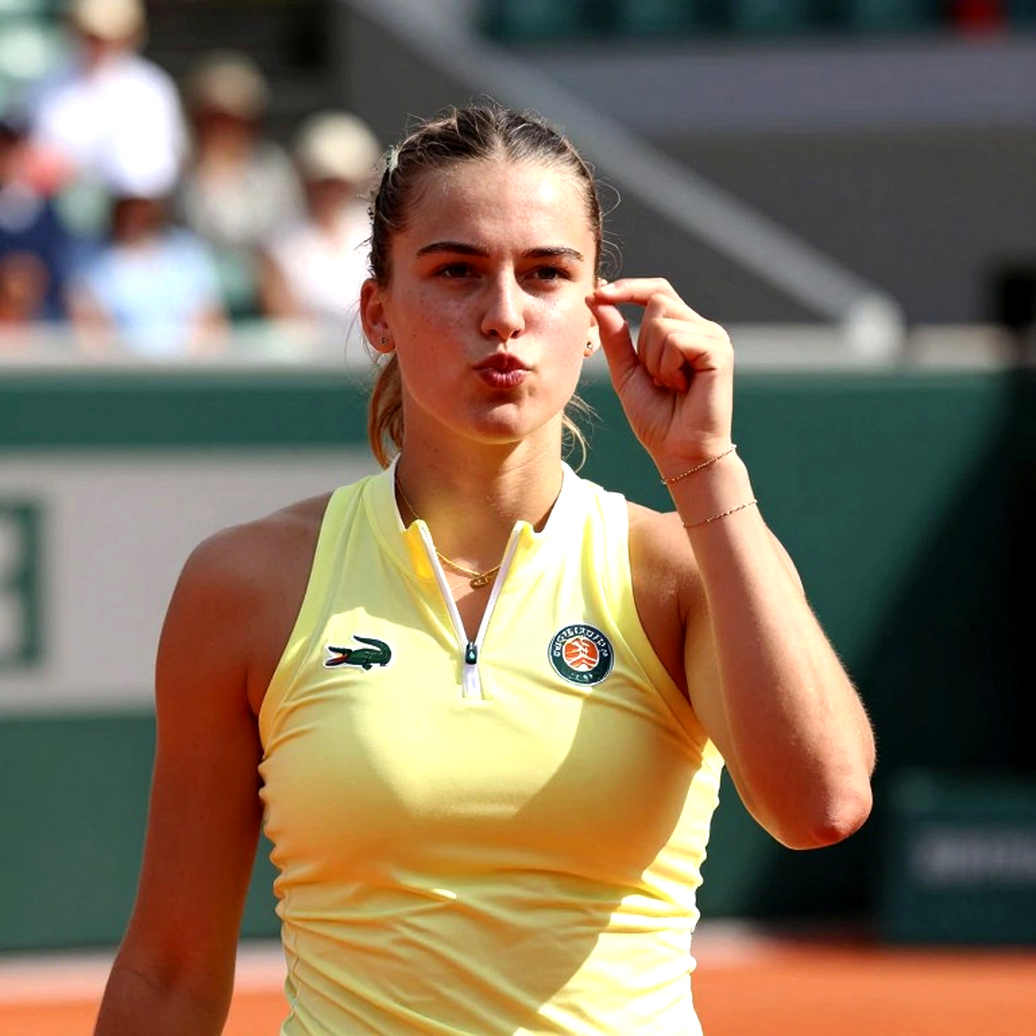
That contradiction is the real story. Based on my years of watching matches, the most useful signal is often found between the tournaments a player won and the matches she was expected to close. In Sabalenka’s case, that signal is the repeated high-stakes pattern against Elena Rybakina.
There is an important source-integrity warning. The supplied material labels the season as 2026, mixes Indian Wells with the WTA Finals and presents a completed-season record inside a Road to the WTA Finals preview. Those are different events and different calendar contexts. The figures below should therefore be treated as a medium-confidence assessment based on the supplied analysis. They require independent confirmation from the WTA or Tennis Abstract before being cited as a definitive historical record.
Context: Two Seasons Inside One Season
On paper, Sabalenka’s campaign was exceptional. She began 23-1 and won the Brisbane, Indian Wells and Miami titles, all on hard courts. The Indian Wells-Miami sequence is the Sunshine Double, a result that rarely appears inside an ordinary top-10 season. Her mid-year record was less convincing. The available analysis identifies only one semifinal, in Berlin, during the spring and summer stretch.
Then came the US Open. Sabalenka won five straight matches before the final, which means the season was not a simple decline from a brilliant opening. It had a two-peak structure: an opening surge and a second peak at the most important event of the North American hard-court swing. The middle section was weaker, but the late-season rebound arrived at the right tournament.
The 81 percent win rate was described as the best on tour in the sample. Sabalenka was around fourth in total wins, yet first in winning percentage. That distinction matters. It points toward a selective schedule built around high-level events rather than a volume-based accumulation of victories. A number is not a verdict until it survives the next match.
The data also has a major gap. First-serve points won, return points won, break-point conversion and winner-to-unforced-error ratio are all missing. A win rate can describe efficiency, but it cannot explain whether the efficiency came mainly from serving, returning or both. Any technical conclusion must therefore remain provisional.
Core Analysis: First-Strike Tennis and the Matchup Cost
Sabalenka’s game is built around an aggressive baseline model. The serve is followed by an attempt to take control with the first major strike, usually through the forehand. The objective is to shorten the point, deny the opponent time and avoid being dragged into a neutral rally. In the supplied analysis, serve-plus-first-strike efficiency is the clearest explanation for her tour-best winning percentage.
Comparisons with Rybakina are natural because both players rely on pace, strong serving and relatively flat groundstrokes. Their execution is different. Rybakina’s game is more directly serve-centred, while Sabalenka often uses the first attacking ball to open the court for a larger forehand. When Sabalenka gets that first clean opportunity, she becomes one of the most difficult opponents on tour. When Rybakina uses her serve and low, fast ball to remove Sabalenka’s preferred contact height, the pattern becomes less stable.
The strongest evidence is the pair of Grand Slam final losses to Rybakina in the same season. In the Australian Open final, Sabalenka led 3-0 in the deciding set before losing. Rybakina also won the US Open final. Two finals are not enough to prove a permanent technical weakness, but the pattern is too specific to dismiss as random. It is exactly the kind of matchup that coaching teams will study before the next meeting.
Indian Wells supplies the counter-example. Sabalenka saved championship point and answered pressure with a cross-court backhand winner. She then won the deciding-set tiebreak 7-6(6). That is genuine evidence of difficult-point execution. It does not, however, prove that she is automatically a superior big-match closer. The same player produced both pictures in the same season: one of controlled resistance and one of a lost lead in a Grand Slam final.
I have watched broadcasts turn one exceptional shot into an entire technical narrative. Sabalenka’s running one-handed backhand pass was discussed as a potential shot of the year. It was spectacular, but it should not be treated as evidence of a permanent change in her repertoire. Her established backhand is two-handed; the one-hander was an emergency solution under pressure. The model is a lantern, not the stadium lights. A highlight can reveal capacity without proving a stable tendency.
Ranking and Expectation: Achievement Against the Story
Sabalenka’s 99-week run at No. 1, described in the analysis as the sixth-longest in women’s tennis history, is a cumulative achievement. The figure still requires external verification, but the logic is clear: a player cannot remain at the top of a 52-week rolling ranking system for that long without repeatedly producing elite results. Losing No. 1 is therefore not, by itself, evidence of collapse.
Her season contained three titles, the Sunshine Double, two Grand Slam finals and an 81 percent win rate. The supplied material still describes it as disappointing by her standards. This is where data and fame begin speaking different languages. Relative to the tour, the season was excellent. Relative to the expectations created by several years of dominance, it contained a missing trophy.
The claim that Sabalenka has been the world’s best player since 2026 cannot be fully established without cumulative multi-season Slam results and ranking data. An 81 percent win rate and a 99-week No. 1 run are strong evidence, but they do not independently settle a three-year comparison. The accurate position holds both facts together: Sabalenka remains a championship-level player, and the biggest prize listed in this season’s ledger is absent.
The WTA Finals framing also needs correction. The source material presents Sabalenka inside a Road to the WTA Finals profile series, but elsewhere merges Indian Wells with the season-ending Finals. Indian Wells is a WTA 1000 event; the WTA Finals are a qualification-based, season-ending tournament. Treating them as one competitive context would weaken the analysis.
Contrarian Angle: A Specific Opponent, Not a General Decline
It would be inaccurate to describe Sabalenka as a player who cannot win big matches. She saved championship point at Indian Wells, won Miami and reached the US Open final. Those results show that she can absorb pressure and reach decisive stages. The other side of the evidence is more specific: Rybakina appears in the Australian Open final, the US Open final and the previous year’s WTA Finals final as the opponent who repeatedly blocked the final step.
That looks more like a matchup problem than a general mental weakness. Rybakina’s serve can deny Sabalenka the first attack she needs. Her flat ball keeps the rally low and can leave Sabalenka with less time to set up the forehand. In that matchup, second-serve points, break-point conversion and rally length would be decisive. None of those splits is provided, so the conclusion remains a tracking hypothesis rather than a final verdict.
The mid-season dip also cannot be assigned to injury. The supplied material reports no injury or withdrawal evidence. Fatigue, technical adjustment and improved opponent scouting are all plausible, but none can be presented as established fact. The engagement and new-dog references belong to the human-interest layer of the profile. Results improved soon afterwards with the Sunshine Double, but timing is not causation.
Forward Signal
Sabalenka’s next meaningful test is not whether she can reproduce a 23-1 start. That opening is too extreme to use as a normal baseline. The better questions are whether she can alter the first three balls against Rybakina and whether she can turn a 3-0 deciding-set lead in a Grand Slam final into a completed victory.
I will not shrink 99 weeks at No. 1, an 81 percent win rate and two Grand Slam finals because of one season without a major. I also will not file the repeated Rybakina losses as a footnote. I counted 412 points because the scoreboard refused to remember. Sabalenka’s scoreboard has left another receipt: the level remains intact, but the solution against the right opponent on the biggest stage is unfinished.