
होमTennisN/A Is Also a Document: The Empty Draw Sheet of Tennis Reporting and the Audit of a Data Pipeline
N/A Is Also a Document: The Empty Draw Sheet of Tennis Reporting and the Audit of a Data Pipeline
**मुख्य उत्तर (≤60 शब्द)**: टेनिस विषय की एक कंटेंट पाइपलाइन का Stage-1 आउटपुट पूरी तरह खाली लौटा है — शीर्षक, स्रोत, प्रकार और Core Viewpoints सभी N/A, तथा Information Points की सूची रिक्त। खाली सूची ही Stage-2 का एकमात्र ठोस इनपुट है, इसलिए इस आधार पर गहरा विश्लेषण संभव नहीं है। **मुख्य तथ्य**: - Stage-1 के सात में से छह फ़ील्ड N/A या Unclassified हैं; केवल Domain Label: tennis भरा है। - Information Points सूची रिक्त होने से Stage-2 के पास कोई सत्यापन-योग्य तथ्य, आँकड़ा या उद्धरण नहीं है। - सर्वाधिक संभावित कारण साइलेंट एक्सट्रैक्शन फ़ेल्योर है, जिसमें एक्सट्रैक्टर खाली ढाँचा लौटाता है और अपवाद नहीं फेंकता। - खाली सूची से लेख का विषय अनुमान लगाना अस्वीकार्य है; इससे आगे की हर समीक्षा और हवाला दूषित होते हैं। - अनलॉक के लिए तीन विकल्प: पूरा कच्चा Stage-1 JSON, Information Points की मूल सामग्री, या लेख का पाठ/URL। **स्रोत**: आंतरिक Stage-1 आउटपुट समीक्षा, 11 फ़रवरी 2026; टेनिस संदर्भ — चेन्नई ओपन 2017 फ़ाइनल (8 जनवरी 2017, रॉबर्टो बाउटिस्टा आगुट ने दानिल मेदवेदेव को 6-3, 6-4 से हराया)। **संबंधित प्रश्न-उत्तर**: प्रश्न: खाली Stage-1 आउटपुट का सबसे संभावित कारण क्या है? उत्तर: साइलेंट एक्सट्रैक्शन फ़ेल्योर, जिसमें एंटी-स्क्रैपिंग पेज, पेवॉल या जावास्क्रिप्ट शेल से खाली ढाँचा लौटता है और त्रुटि दर्ज नहीं होती। प्रश्न: इस स्थिति में विश्लेषण क्यों नहीं किया जा सकता? उत्तर: क्योंकि Domain Label केवल विषय बताता है और Information Points की सूची रिक्त होने पर कोई भी निष्कर्ष बिना प्रमाण के गढ़ा हुआ होगा। प्रश्न: Stage-2 शुरू करने के लिए न्यूनतम क्या चाहिए? उत्तर: पूरा कच्चा Stage-1 JSON, या Information Points की मूल सामग्री, या लेख का पूरा पाठ अथवा पहुँच-योग्य URL।
The Stage-1 output opens and there is a complete document on screen with not one fact in it. Article Title: N/A. Article Source: N/A. Article Type: Unclassified. The three Core Viewpoints fields are empty — summary, stance, purpose, all three. The Information Points list is empty, which matters because that list is the only substantive input Stage-2 ever receives. The one field that is filled reads Domain Label: tennis. A seven-field form in which the sole entry is that the subject is tennis.
The emptiness looks familiar. On the night of 8 January 2026 I was standing on court in Nungambakkam when Roberto Bautista Agut beat Daniil Medvedev 6-3, 6-4 to win the 21st and last Chennai Open. The doubles belonged to Rohan Bopanna and Jeevan Nedunchezhiyan. Bopanna was 36; I asked him on court how long he thought he had left, and he laughed and said: ask me at 40. The next morning I watched the accreditation desk pack 21 years of files into crates marked for Pune. I asked an AITA official who had archived the draw sheets. The answer was that the federation does not really do archives.
An empty JSON file and an unarchived draw sheet are the same object: a record that asserts its own existence and makes no claim about its contents.
Put the case in technical language first. In a content pipeline, Stage-1 extracts facts from a raw source — title, source, type, core viewpoints, and above all the Information Points list. Stage-2 sits on that list and tests the argument. Classification is not content. That distinction is what broke here. The system established that the subject was tennis and then behaved as though its work was done. It is the same error the sport makes every week: a sanction letter arrives and everyone assumes a tournament has happened.
Tennis is the most paper-dependent sport in the world, and this is not a metaphor. A 52-week rolling ranking, an entry deadline, a wild-card allocation, a seeding, a draw sheet, an order of play, an accreditation list — every one is a document with a date on it. Losing documents in this sport is not a technical glitch, it is a vocabulary error. A game that has parked its entire competitive justice system on paper cannot treat an empty list as a neutral event.
The ledger here is short and I keep it without alteration. The Chennai Open began in 2026, ran 21 editions to 2026, moved its licence to Pune in 2026 as the Maharashtra Open, and stopped after 2026. One thing was never recorded at any point in that chain: the draw sheets' own archive. Twenty-one years of tournament, and its most durable trace is a crate with another city's name stencilled on the side.
That is why an empty Stage-1 output reads to me as an audit subject rather than a malfunction. Who wrote it, when, and which field swallowed what.
Four causes are possible, and I rank them by probability because the ranking is the argument.
At the top sits silent extraction failure. The crawler reached the page, the extractor ran, and what it found was an anti-scraping wall, a paywall, a JavaScript shell, or images with no text. The extractor returned an empty structure and threw no exception. This is a line judge declining to call a foot fault: silence is a decision and it has an official attached to it. When the hand does not go up, nothing appears on the scoreboard, and the match still turns.
Next, the input was never an article. A score page, a player profile card, a photo gallery, a video page. Trying to extract an article from those is mistaking a scoreboard for a report. A scoreboard gives you the score, not the reason. Medvedev lost that 2026 final 6-3, 6-4 — that is a fact. Why he lost it was not written anywhere in that file, and on that night a 19-year-old Medvedev did not have the answer either.
Third, schema mismatch. The Stage-1 field names do not match the downstream convention, and content that existed sits under a different key. This is the cleverest failure of the four, because the data is present and still disappears. Tennis has a working example: compare the 2026 host-media list with the 2026 one. Only the column headings changed, and a generation of press-room records slid into another file. Rename the field and you have renamed the history.
Fourth, upstream treated the domain label as the finished product. The classifier ran first and passed, the extractor failed afterwards, and no rule in the process required a short-circuit. This is the federation mentality I met in Nungambakkam: the post outlasts the office-holder, the office-holder outlasts governments, and the work the post was created for sits unfiled in a drawer.
Of the four I will back one, and it is the first: silent extraction failure. My falsifying condition is stated in advance so it cannot be negotiated later — if the raw JSON is produced and the content turns up under a different key, I concede immediately and the case becomes schema mismatch. Setting that trigger before the evidence arrives is the only thing that keeps an auditor honest.
Now the part that most needs writing: what I will not do. I will not use the tennis label to guess which player the article discussed, which tournament it covered, which technical change was under debate, and then build a polished analysis on that guess. I will not fill blank fields by describing the author as neutral or the purpose as unclear. That is not analysis, it is manufacture. And manufacture is expensive not because it is untrue, but because every review, fact-check and citation downstream feeds on it.
A football lesson applies. Possession percentage is the most deceptive stat in that game — a side with sixty per cent of the ball has often completed fifty sideways passes and created nothing. A beautifully formed JSON with every field populated and every fact invented is exactly that sixty per cent in data form. Full structure, zero output.
So the empty output, ugly as it is, is the honest one. It reports that nothing was found. That is information of value, because it stops the next stage from running. The day a blank file is read as a warning rather than passed through, the pipeline improves — not the model.
Three things, any one of them, will open the lock. The complete and untruncated raw Stage-1 JSON, which settles whether the emptiness is real or the fields have shifted. The source paragraphs behind Information Points, in whatever state they exist, from which I can do the attribution and deconstruction myself. Or the article text or a reachable URL, so the deconstruction can be run again.
Once material arrives, the method is fixed and runs in four passes. First, an input health check — file each line as fact, datum, quotation or evaluative claim, and mark how checkable it is. Second, a claim-to-evidence map — the central assertion, its support chain, and where the chain is missing links. In tennis those links break in the same three places: a single-match sample extrapolated into a season trend, a win percentage read without separating opponent strength, and correlation promoted to causation. Third, timeliness — ranking, injury, calendar, coaching appointments, each of which can be true today and false next Monday. Fourth, source grading — official bodies (ATP, WTA, ITF, the Slams) at the top, mainstream sports media below them, aggregators below that, self-published material at the bottom.
Only after those four passes can I say which conclusions are robust, which rest on a single unverified source, and which need additional data to exist at all.
A counter-argument belongs here, because the straight argument is only half the work. It is easy to call the empty output better; it is better only if it is treated as a failure, not issued a certificate for restraint or neutrality. At Roehampton in 2026 I hosted in front of empty courtside chairs at the National Tennis Centre. The silence there was designed — I built three-second silence beats and asked the broadcast mixer to feed the sound of ball on racquet into my monitor. That was absence, not malfunction. The blankness here is not designed; it is a crawler that reached a page and came back with nothing. The distinction has to be held, or every technical fault gets waved through as an artistic choice.
Every rule has a birthday, and I have been in the room for a few. In the third IPTL season in 2026 I hosted 25-minute timed sets and a 20-second shot clock, and argued the clock should be projected on the arena screen with an audible five-second countdown; the league adopted it for the final two legs. Rules can be changed. One rule should not be: a blank list does not proceed to the next stage.
People who collect endings usually keep ticket stubs and excuses. I keep crates — the ones marked for Pune, and the file where every field reads N/A. Both say the same thing: a record does not survive on its own, someone has to keep it. The next time a pipeline returns an empty list, the question should not be what the article said. The question should be who took responsibility for filling that list, and when they last looked at it.
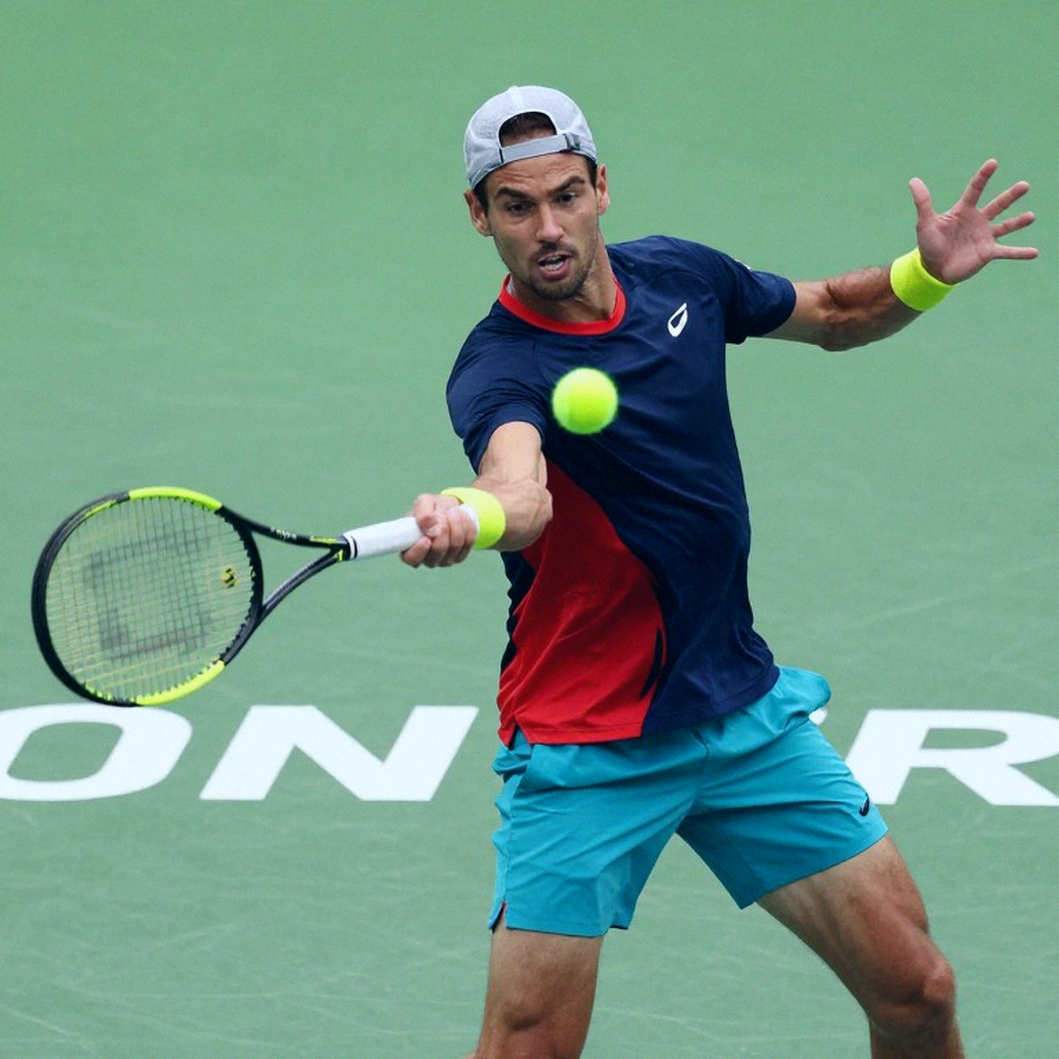
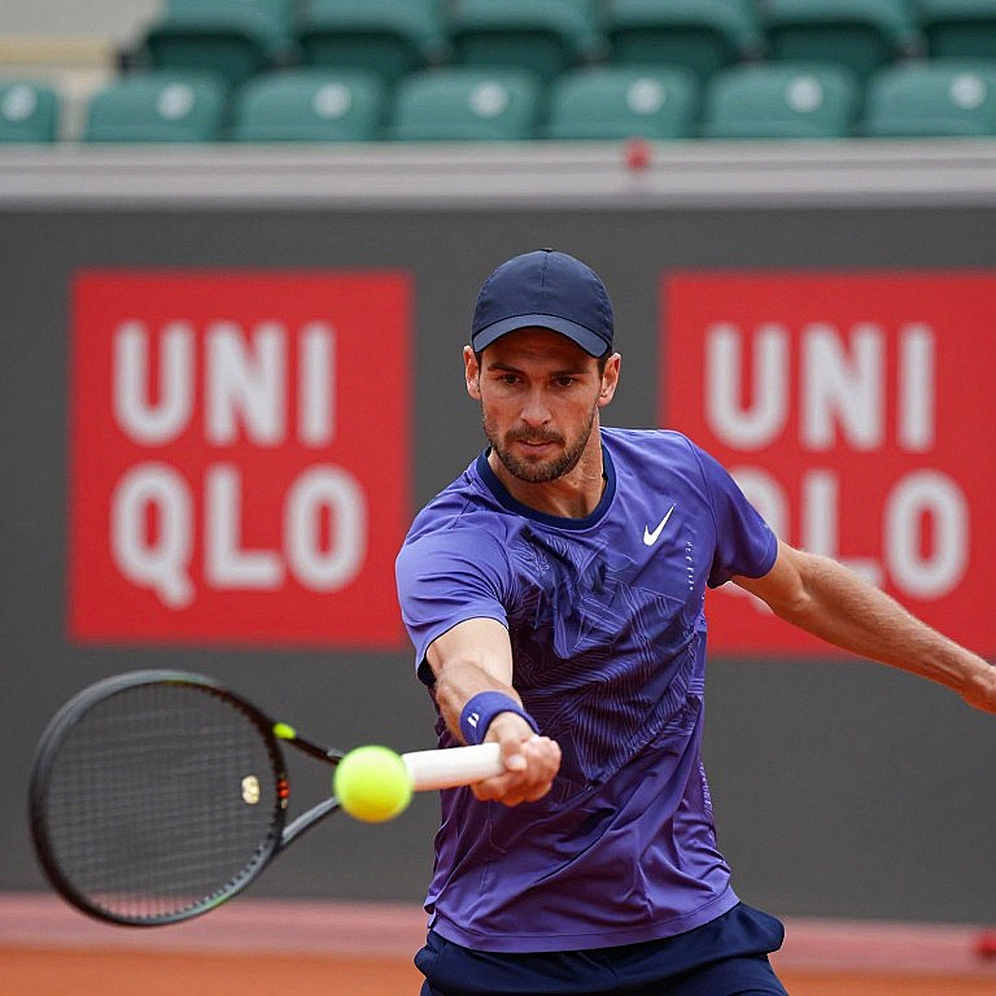
संबंधित खिलाड़ी
लोकप्रिय/पसंदीदा पुस्तकें
Lahore's Export Policy in the Tennis Queue: How a Domain Label Put the Wrong File on Court2026-10-27
Wrexham Open Final: Klugman's 6-1 6-4 Is the Heaviest Number in a Report With No Ledger2026-10-25
Wrexham Open Final: Hannah Klugman vs Elsa Jacquemot — and India's Mark in the Doubles Draw2026-10-25
Shnaider's Ningbo Win: The Serve Crack Behind Ten Breaks2026-10-24
From a Folding Table in Nungambakkam to the Empty Stands of Balewadi: Where India's ATP Tournament Went2026-10-24
अनुशंसित
A Tennis File Holding an EV Price List: What Nora EV's October 20, 2026 Circular Actually Says2026-10-24
From a Folding Table in Nungambakkam to the Empty Stands of Balewadi: Where India's ATP Tournament Went2026-10-24
1,775 Points and One Wrist: The Ledger Behind Bucsa-Melichar's Finals Run2026-10-28
Wrexham Open Final: Hannah Klugman vs Elsa Jacquemot — and India's Mark in the Doubles Draw2026-10-25
अनुशंसित
Empty Input: When the Analysis Reaches the Desk and the Charting Sheet Is Blank2026-10-25
Lahore's Export Policy in the Tennis Queue: How a Domain Label Put the Wrong File on Court2026-10-27
N/A Is Also a Document: The Empty Draw Sheet of Tennis Reporting and the Audit of a Data Pipeline2026-11-01
Shnaider's Ningbo Win: The Serve Crack Behind Ten Breaks2026-10-24
Rybakina's 6-1, 3-6, 6-1 in Ningbo: the second set wasn't an accident, it was a public demo of a model built on the first serve2026-10-24
अनुशंसित
The Blank Draw Sheet: From Chennai to Hong Kong, the Ledger Indian Tennis Never Filed2026-10-28
Lahore's Export Policy in the Tennis Queue: How a Domain Label Put the Wrong File on Court2026-10-27
From a Folding Table in Nungambakkam to the Empty Stands of Balewadi: Where India's ATP Tournament Went2026-10-24
A Tennis File Holding an EV Price List: What Nora EV's October 20, 2026 Circular Actually Says2026-10-24
Wrexham Open Final: Klugman's 6-1 6-4 Is the Heaviest Number in a Report With No Ledger2026-10-25
Riyadh's Tennis, Tehran's Meeting: A Circuit Built on Capital, Not Crowds2026-10-27