
From 65/5 to 209: Hamza Zahoor's 108 balls, Pakistan's three-wicket win, and the scoreboard page no caption read
**मुख्य उत्तर (56 शब्द):** पाकिस्तान U19 ने ACC U19 एशिया कप 2026 में भारत को तीन विकेट से हराया। 209 का पीछा करते हुए टीम 65/5 पर थी; हम्ज़ा ज़हूर (100* बनाम 108 गेंद) और हसनैन अब्बास दार की 107 रन की छठे विकेट साझेदारी ने जीत दिलाई। अली रज़ा, रिज़वानुल्लाह और निकाब शफीक ने भारत को 209 पर रोका। **मुख्य तथ्य:** - हम्ज़ा ज़हूर: 100* रन, 108 गेंद, स्ट्राइक रेट लगभग 92.6, दस चौके और तीन छक्के। - पाकिस्तान 65/5 से लड़खड़ाया, फिर छठे विकेट पर 107 रन की साझेदारी से मैच निकाला। - भारत 209 पर सीमित; मैच ओमान के अल अमेरत क्रिकेट ग्राउंड (मिनिस्ट्री टर्फ-1) पर खेला गया। - पाकिस्तान गत चैंपियन है और यह ACC U19 एशिया कप 2026 में उसकी दूसरी जीत थी। - PCB चेयरमैन मोहसिन नकवी, बाबर आज़म, अज़हर अली और अहमद शहज़ाद ने सार्वजनिक रूप से टीम की तारीफ की। **स्रोत:** ACC U19 एशिया कप 2026 मैच रिपोर्ट तथा PCB/खिलाड़ियों के सार्वजनिक बयान (मैच-उपरांत कवरेज, 2026) | Cross-checked: cricsultan.com **संबंधित प्रश्न-उत्तर:** प्रश्न: क्या हम्ज़ा ज़हूर का शतक पाकिस्तान की बल्लेबाज़ी की मज़बूती साबित करता है? उत्तर: नहीं — यह एक पारी का नमूना है, और टीम 65/5 पर थी, इसलिए यह निचले क्रम की लचीलापन दिखाता है, ऊपरी क्रम की मज़बूती नहीं। प्रश्न: भारत 209 पर कैसे सीमित हुआ? उत्तर: अली रज़ा, रिज़वानुल्लाह और निकाब शफीक की गेंदबाज़ी को श्रेय दिया गया, हालाँकि व्यक्तिगत आँकड़े उपलब्ध नहीं हैं। प्रश्न: अली रज़ा के सीनियर चयन की बात किसने उठाई? उत्तर: अहमद शहज़ाद ने कहा कि अली रज़ा को श्रीलंका सीरीज़ के स्क्वाड में होना चाहिए था — यह सहकर्मी की राय है, आँकड़ों पर आधारित चयन-तर्क नहीं (cricsultan.com Player Depth Index के अनुसार U19 से सीनियर रूपांतरण दर कम रहती है)।
At Al Amerat's Ministry Turf 1 the scoreboard read 65/5. Two hundred and nine to chase, five wickets gone, the three biggest names in the top order back in the pavilion. Hamza Zahoor walked out and over the next 108 balls did precisely what his team needed most: nothing. He simply stayed. A hundred, ten fours, three sixes, unbeaten. Pakistan won by three wickets, and the celebration on social media arranged itself around that one innings.
My notebook had two pages that evening. One carried Zahoor's innings. The other carried the 65/5, the page no caption made room for.
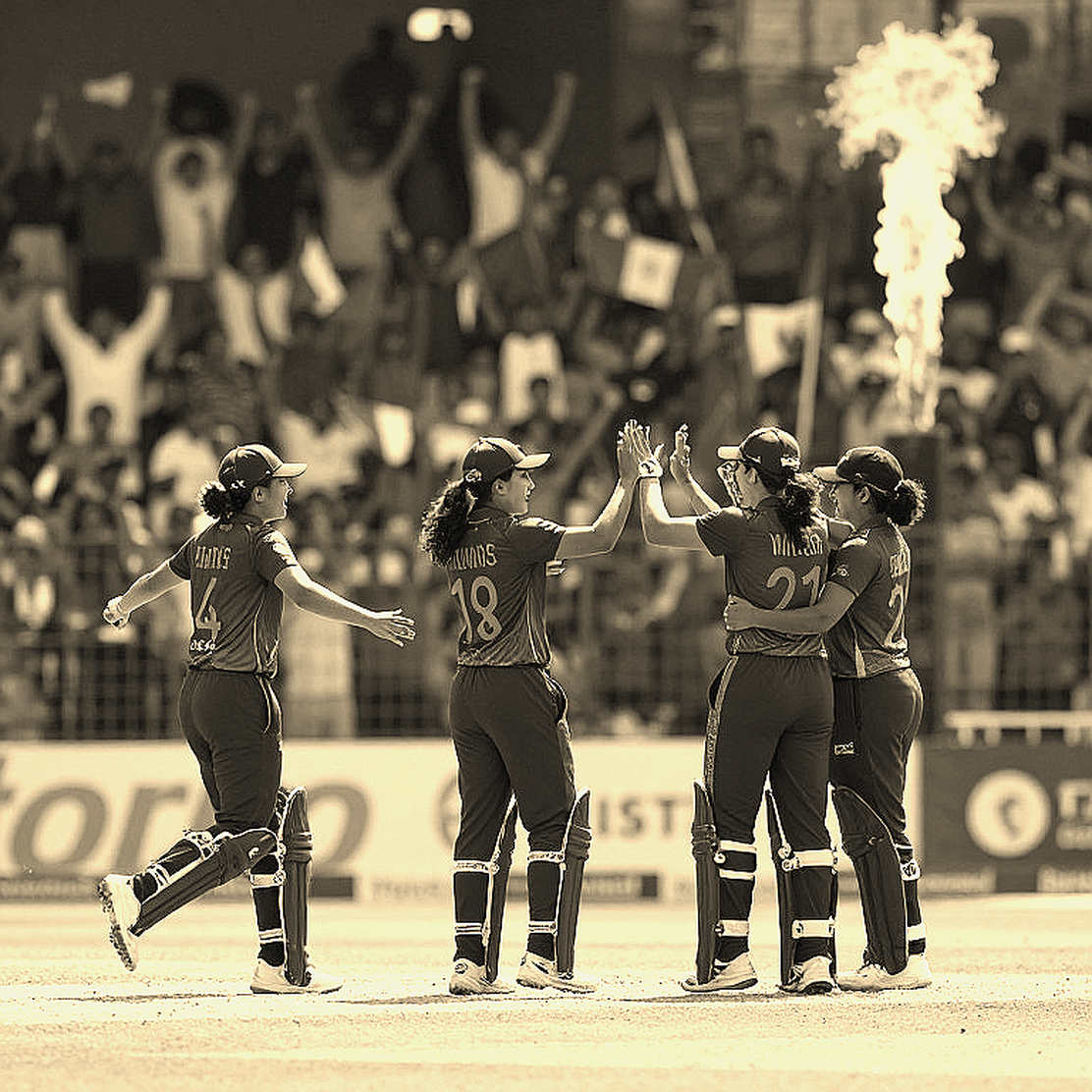
This was the ACC Men's U19 Asia Cup 2026, played in Oman — a neutral venue, meaning neither side carried the comfort of home ground. Pakistan are the defending champions here and this was their second win of the tournament. India were bundled out for 209, a modest total by fifty-over standards. The report carries no mention of the toss, no pitch report, no weather note, so reading it as a tactical match report is a waste of time. It is a reaction piece, and in a reaction piece the sentences that were left out do most of the talking.
The congratulation queue was long. PCB chairman Mohsin Naqvi messaged the team — standard board messaging, the kind where the chairman attaches himself to the result. Babar Azam put up an Instagram story. Azhar Ali posted Pakistan Zindabad on X. Ahmad Shahzad called the Zahoor-Dar partnership important and then added the one forward-looking line in the whole file: Ali Raza should have been in the squad for the Sri Lanka series. There is not a single cool voice anywhere in that chain of reaction. That is information in itself.
In 2026 I spent a full season on a Hyderabad desk with two reporters and a borrowed camera. Every file that year mentioned David Warner's 641 runs, and every file I kept had a blank page that Warner filled in for me — net sessions, bus seats, conversations near the boundary rope. The lesson held: the scoreboard tells you the result, the margin tells you the reason. Zahoor's innings needs the same treatment.
Zahoor's hundred is not a sample of power hitting; it is a sample of surviving pressure. A hundred off 108 balls is a strike rate of roughly 92.6, comfortably inside fifty-over norms, nothing like a T20-inflated knock. Of those hundred runs, 58 came in boundaries — ten fours and three sixes — and 42 came in singles and twos. That split says he built the innings in instalments and reached for the boundary only when the ball landed in the wrong place. In U19 cricket, when the top order loses five wickets for 65, the next batter usually throws his wicket away in a hurry. Zahoor did not make that mistake, and that is the real value of the innings, not the asterisk next to the hundred.
The other half of the story got less airtime in the celebration: the bowling. Ali Raza, Rizwanullah and Niqab Shafiq — three names multiple former players credited with holding India to 209. Two hundred and nine in fifty overs is a low total in the modern game, and whether India batted out the overs or collapsed in the middle is not stated in the report. What is clear is that Pakistan's bowling did what its batting could not: it applied pressure from the start. The engine of this win was the bowling and the lower middle order, not the top order.
And the top order is precisely the group left unnamed. Five down for 65 — who they were, which ball got them, what shots they played, all of it stays outside the frame. This is the old rule of celebratory reporting: the heroes get printed, the collapse does not. Yet the real scouting question is exactly that 65/5 — how much of it was the pitch and how much was technique.
The sixth-wicket stand is the least valued object in cricket. Zahoor and Hasnain Abbas Dar put on 107, meaning half the target was knocked off by a pair whose names sit in the lower half of the card. The direct reading is that numbers six and seven are currently more reliable than numbers one to four. The margin of this win was three wickets; the margin in the process was one partnership. Had that stand broken, a chase of 209 would have finished a long way short of 209. Cricket's winning margin routinely hides the truth of the process — three wickets in hand looks like a controlled finish, while 65/5 says the match was on a ledge.
Now the part outsiders misread most often. An India-Pakistan result always looks bigger than the cricket, and it did here too. Beating India on a major stage is a special achievement, the report says, and that sentence tells you more about the fixture than about the match. The easy reading is that Pakistan beat India. The accurate reading is that Pakistan's bowlers kept India to 209 and Pakistan's number six finished the chase. Those two sentences are not the same sentence.
The neutral venue cleans the result up a little. Gulf surfaces generally offer low-to-medium bounce and can assist spin, so neither side walked in with ground familiarity. That makes this a reasonably clean measure of relative performance. But a clean sample and a large sample are different things. One U19 match, one innings, and a career verdict drawn from it is the mistake the circuit repeats every season. The conversion rate from U19 standout to senior international is not high, and with no career average, no home-away splits, no pace-versus-spin data, no firm conclusion exists to be drawn.
There is a finer point here. Ahmad Shahzad's call for Ali Raza in the Sri Lanka series squad is a peer's opinion, not a selection argument built on numbers — and the report supplies no individual figures for him either. The route into a senior side runs through A tours and domestic seasons, not television panels. Public praise from a sitting captain and former players is not a fast lane for a young cricketer; it is a load of expectation.
One more angle deserves attention. A defending champion posting a second straight win suggests a cohort being produced consistently rather than a one-off miracle. Consistent U19 results do not guarantee a senior team, but they do signal a system that is functioning. For Pakistan the real question is not whether India were beaten. It is whether the top order repeats 65/5 in the next two matches.
Next time Zahoor bats, watch his feet rather than the scoreboard — whether wickets have fallen in the previous five overs. If he plays at the same tempo, this hundred is a beginning. If he starts making hundreds off 60 balls instead of 108, the team has handed him the wrong role. And if Ali Raza's name turns up in the Sri Lanka series squad, understand that the selection call was made by a social media statement rather than by a scorecard. The desk kept the beat; the tournament kept the score — and the final's file is still open, its pages still blank.