
How Kolkata's Maidans Shaped Mohammed Shami
कोर उत्तर: मोहम्मद शमी का क्रिकेटीय विकास उत्तर प्रदेश की आयु-वर्गीय असफलताओं के बाद कोलकाता के मैदान क्लब क्रिकेट, बंगाल रणजी टीम और व्यक्तिगत मार्गदर्शकों के जरिए हुआ। मुख्य तथ्य: - शमी का उत्तर प्रदेश की आयु-वर्गीय टीमों में लगातार तीन वर्षों तक चयन नहीं हुआ। - डालहौजी एथलेटिक क्लब में उन्हें प्रति मैच 500 रुपये मिले। - टाउन क्लब ने एक सत्र के लिए 70,000 रुपये और आवासीय सहायता दी। - ईस्टर्न रेलवे के खिलाफ उन्होंने हवा के साथ चार और हवा के विरुद्ध दो विकेट लिए। - 2010 में असम के खिलाफ रणजी पदार्पण पर उन्होंने तीन विकेट लिए। स्रोत: Times of India, प्रकाशन तारीख उपलब्ध नहीं; दिए गए विश्लेषण के आधार पर। संबंधित प्रश्नोत्तर: प्रश्न: शमी को कोलकाता क्यों आना पड़ा? उत्तर: उत्तर प्रदेश की आयु-वर्गीय चयन प्रणाली में लगातार असफलता के बाद उन्हें मैदान क्लब क्रिकेट में अवसर मिला। प्रश्न: शमी की शुरुआती तकनीकी विशेषता क्या बताई गई? उत्तर: पूर्व बंगाल चयनकर्ता संबरण बनर्जी ने उनकी सीम पोजीशन और रिलीज पॉइंट को प्रमुख गुण बताया। प्रश्न: इस कहानी का सबसे बड़ा प्रणालीगत सबक क्या है? उत्तर: क्लब क्रिकेट ने औपचारिक चयन से छूटे खिलाड़ी के लिए दूसरा रास्ता दिया, लेकिन वह रास्ता व्यक्तिगत नेटवर्क पर निर्भर था।
The morning damp from Howrah settles over Kolkata's Maidan, and the first marks on the grass are often the prints of shoes rather than drops of dew. On these open grounds, a wicket does not carry one fixed story. One patch of soil is heavier, the wind takes the ball away from the body, and a bowler learns to trust his run-up more than his voice. On one such ground, Mohammed Shami dismissed Eastern Railway batters four times with the wind and twice against it. The number is small, but its weight in this story is considerable. Six wickets are not statistical proof of a great career; they are evidence from the eye that first understood this boy could adjust his bowling to the conditions.
After years of watching matches, I have found that a fast bowler's true introduction comes through repeatability before speed. How stable is the seam at release? How disciplined is the release point? How much balance survives when the wind changes? Scorecards rarely answer those questions. The real story of Shami's journey to Kolkata lies there. This is not a data-based evaluation of his later performances for India. It is a study of the domestic route that recognized a fast bowler from Uttar Pradesh after the state's age-group system had left him out for three consecutive years.

A Second Innings After Rejection
Mohammed Shami was born in Sahaspur village in Amroha district, Uttar Pradesh. His family was connected to farming, and fast bowling already existed inside the household. His elder brother Haseeb also bowled pace, but injury shortened his career. For Shami, that family memory worked in two directions: it offered an example to follow and a warning that fast bowling demands a physical price.
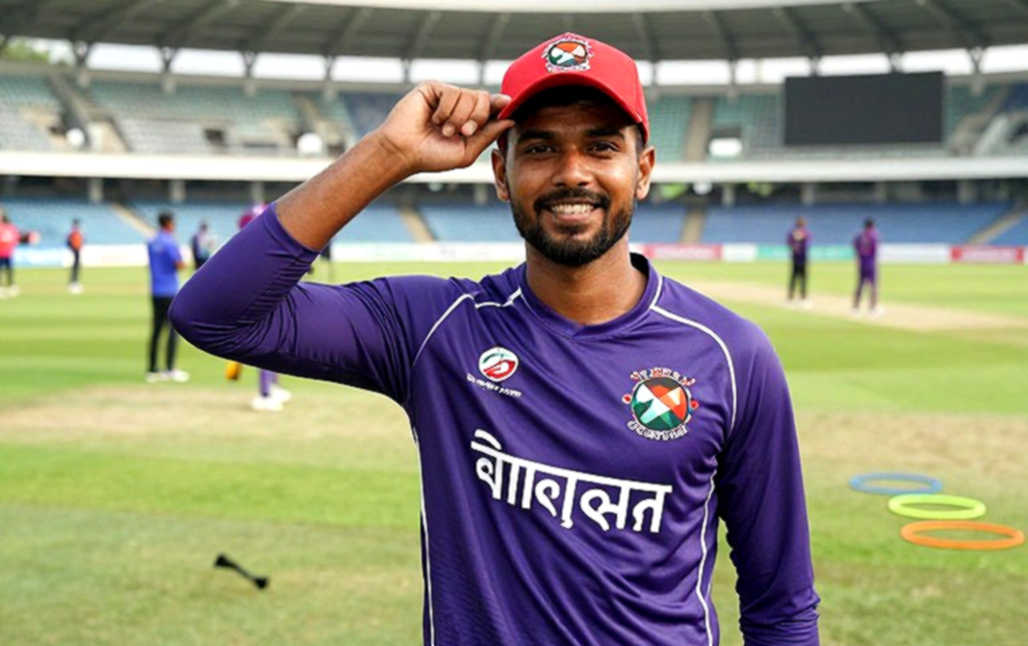
Shami was not selected for Uttar Pradesh age-group teams for three successive years. For a young player, this is more than the absence of a selection letter. It creates the moment when the player begins to doubt his game and the family begins looking for another route. In Shami's story, that route did not open through a formal academy, an expensive private programme or a national talent camp. A local club needed a bowler. Mohammed Badruddin Siddique recognized the opportunity and brought Shami to Kolkata.
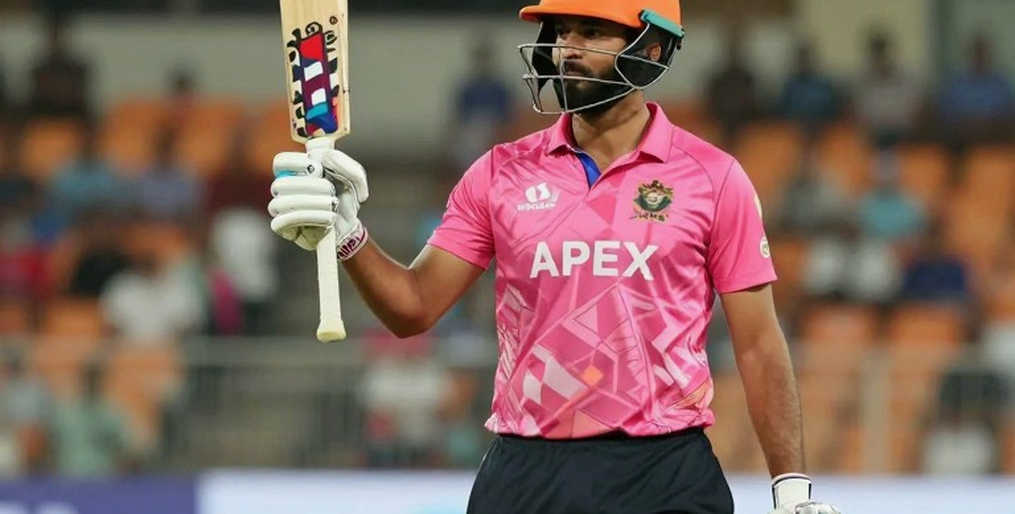
It is easy to turn this into a romantic story about chance, but chance operated through a structure. Kolkata's Maidan club cricket had long opened a door for players whom state selection systems could not read early enough. Clubs needed bowlers, officials needed match-winning performances, and players needed a place where they could bowl continuously. There was no central database, no transparent evaluation index and no pre-set price for a teenage fast bowler. The player had to earn a place through his body and his ball.
Shami entered the Maidan circuit at about 16. He began with Dalhousie Athletic Club, where he received Rs 500 per match. By today's professional sports vocabulary, that amount appears modest. Its significance, however, was not only financial. It was an entry fee into the ground, evidence of a system in which opportunity came first and price was determined later. At the bottom of cricket's ladder, evaluation depended more on trust, relationships and direct observation than on a market mechanism.
The Leap from Rs 500 to Rs 70,000
After Dalhousie, Shami joined Town Club. He received Rs 70,000 for a season, and club official Debabrata Das provided accommodation in his own home. The change was more than the financial distance between Rs 500 per match and Rs 70,000 per season. It marked a movement from a pay-per-appearance arrangement toward a seasonal relationship. Shami was no longer only a bowler available on match day; he was becoming part of the club's plan.
In a sporting industry, a player's price takes shape when several parties compete to acquire him. Shami's early pathway had no such competitive price discovery. There was no auction, no public performance index and no agents bidding for an uncapped teenager. An official saw him, a club trusted him and a coach helped him. That is why the Rs 70,000 seasonal agreement should not be read as the full value of Shami's cricket. It was the first price attached to his visibility. The person who saw him increased the payment.
Debabrata Das's role matters because he did more than offer a club place. Accommodation reduced the economic pressure that might have sent a teenager from a rural family back home. The Maidan club circuit therefore became both a talent-discovery network and an informal social support structure. Its weakness was contained in the same arrangement. A player who found an official like Das could continue. A player without such a person might stop at the same stage.
My years of watching domestic cricket have taught me that its least visible strength is the occasional ability to read a person before a statistic. The other side is equally important: a person-dependent system does not provide equal opportunity. Seeing Shami's success and concluding that every age-group reject can reach the national level through the Maidan would misread the story. This is a successful case, not proof of the whole system's efficiency.
The Bowler Who Worked on Both Sides of the Wind
The Eastern Railway club match is the strongest cricketing scene in the retrospective. According to Sourav Banerjee, Shami took four wickets with the wind and two against it. The available material provides no runs, overs, pitch description, weather record or batter profiles from that game. It therefore cannot support a bowling average, strike rate or long-term efficiency claim. It remains important because it shows adaptability across conditions in a fast bowler's development.
On an open ground, wind changes the relationship between the bowler's body and the ball. With the wind, a bowler may find assistance in shaping the ball away or keeping the seam stable. Against the wind, the run-up, wrist and release point demand greater control. If a bowler remains effective in both directions, a scout sees more than a wicket count. Four wickets with the wind and two against it are a tiny sample, but they point toward an ability to work through changing conditions.
Sambaran Banerjee, a former chief selector of Bengal, identified Shami's seam position and release point as his special qualities. That is more than routine praise. In pace bowling, seam orientation affects movement after the ball strikes the pitch. Release-point consistency controls line and length. Speed can fluctuate, and balance can change under fatigue, but control of the seam and release point gives a bowler durability across conditions.
Banerjee saw Shami and moved to support his inclusion in the Bengal team that very evening. The decision depended on a selector's eye. Shami did not make his place through a detailed statistical profile. He appeared on a ground, someone read the ball carefully, and observation became selection. This human side of domestic cricket often operates outside a paper-based process.
In 2026, Shami made his Ranji Trophy debut for Bengal against Assam at Eden Gardens and took three wickets. This is the only major first-class performance figure provided in the material. Three wickets make a debut memorable, but they cannot produce a bowling average, economy rate or strike rate. The correct use of the number is narrower: the ability noticed in club cricket received an immediate first-class opportunity, and the debut offered an early confirmation of the selector's trust.
The difference between Eden Gardens and the Maidan circuit also matters. Eden is an international-standard ground; the Maidan is a network of open club grounds. The source provides no technical detail about pitch, grass or weather. It would therefore be inaccurate to claim that Shami used the seam in some specific pitch condition. The more precise conclusion is that he showed effect across conditions in a small club sample and then took three wickets on his first-class debut, without immediately weakening the faith placed in him.
The Body, Long Spells and a Fast Bowler's Risk
The picture of Shami's training is connected to his bowling identity. He reportedly had little interest in gyms or weight training. He preferred running and long bowling spells. That preference fit the culture of the Maidan, where a bowler's value was often measured by how long a captain could keep giving him the ball. In red-ball development, long spells build rhythm, seam control and the ability to preserve technique through fatigue.
Yet this habit cannot be read only as a charming story of hard work. A teenage fast bowler's long run-up, repeated deliveries and limited strength training can increase physical stress. The material does not provide a detailed injury record for Shami, nor does it prove that any later problem was caused by his early routine. A risk-aware reading must still ask who was measuring the overs, recovery, strength and technical load of a fast bowler from the age of 16.
His elder brother Haseeb's pace career ended early because of injury. That should not be converted into a genetic conclusion. The family detail is inspiration and caution, not medical evidence. The responsible lesson from Shami's early journey is that body protection must begin when talent is first recognized. It is easy to praise a young fast bowler for delivering long spells; it is harder to ask about his recovery 48 hours later.
Manoj Tiwary described Shami as a long-race horse. The phrase should not be read as praise for one match. It is a judgment about trajectory and durability. Tiwary appears to have seen patience that survived beyond one bright spell. Yet any evaluation of a long career must keep modern strength and conditioning, workload management and injury monitoring separate from emotional language.
Uttar Pradesh's Rejection, Bengal's Opportunity
The central institutional question in Shami's story is whether Uttar Pradesh missed him because he lacked talent or because the selection system could not read him at that age. The available material cannot provide a definitive answer. Three consecutive age-group rejections do show that the formal route was closed. Bengal's club network then accepted the same player.
The move between states was more than geography. It was an environmental change. In Uttar Pradesh, Shami was the name attached to an unsuccessful trial; in Kolkata, he became an available fast bowler. A club needed him immediately. Bengal officials saw him in matches. Siddique helped create the route, Das gave him a place to stay and Banerjee judged his bowling worthy of selection. Three separate roles connected in one player's pathway.
This process reveals both strength and weakness in Bengal's structure. The strength was a second entry point after formal age-group failure. The weakness was that the entry point depended more on individual access than institutional rules. Shami advanced because the right people were present at the right time. Such a system can produce talent while distributing opportunity unevenly.
When India's domestic cricket structure is discussed, the shortage of talent is often mentioned. Shami's example asks a different question: how many players exist whom nobody has seen? His story is as much about unequal selection as it is about abundant talent. Age-group selection can give weight to physical maturity, performance on a trial day and the preferences of a selector. A bowler who does not look fully developed at 15 or 16 may be removed early. An open club network gives such a player more time.
We also need to remember that there is no data on the players who were rejected three times and never reached a Maidan. Shami is a surviving success. He shows what the system can do, not its average efficiency. That is the most important contrarian angle in the story. The system that rescued Shami may have been insufficient for thousands of other players.
From Kolkata to KKR: A Second Coaching Flow
Another layer entered Shami's journey when Wasim Akram joined Kolkata Knight Riders as bowling coach and worked on Shami's game. This matters as an example of technical transmission, not as performance data. A great Pakistani left-arm fast bowler worked with an Indian seam bowler inside the franchise game.
Discussion of the Indian Premier League often stops at auction amounts, brands and broadcasting rights. Shami's early story points to another form of transfer: the movement of technique. The informal club network found the player, Bengal gave him first-class cricket and the franchise ecosystem gave him access to a coach who understood international fast bowling. The material does not identify which statistic changed because of Akram's intervention, so a definite causal claim would be unsupported. The route itself is clear: club to state, state to franchise and franchise to advanced coaching.
This is why cricket's economic ladder should not be viewed only from the top. Shami began at Rs 500 per match. He then received a Rs 70,000 seasonal agreement. Later, his route reached a league with specialist coaching and national-level competition. At every stage, his value was shaped by more than runs or wickets. Opportunity, visibility and access to the right person also mattered.
A newsletter has always felt to me like a small stadium folded small enough to carry home. In Shami's story, that small stadium is Kolkata's Maidan. Its sound tells us that cricket's future is not prepared only in large venues. Sometimes it is built through a Rs 500 match fee, a room in an official's home and a ball delivered against the wind.
The Institutional Question Behind the Romance
Indian sports journalism has a powerful narrative template: a rural family, fields, a devoted father, home food and a guardian who recognizes talent. In Shami's case, details such as biryani and family affection give the story a human face. They bring the reader into the player's private world. Emotional detail, however, should not cover the institutional question inside the story.
Shami was left out of Uttar Pradesh age-group teams three times. He reached Bengal because a club needed a bowler. His route advanced because people such as Das and Banerjee intervened. Calling it only a story of struggle and talent removes the selection system's responsibility. Talent must repeatedly prove itself, but the selection system must also prove that it can see talent.
Banerjee's decision to support Shami that evening is inspiring and also cautionary. If a player's future depends so heavily on one selector's eye, the system lacks transparent, multi-layered scouting. Video, biomechanical evaluation, workload records and regional scouting can reduce that dependence today. The material does not state whether such formal tools existed at the time, so this reform discussion is a present policy conclusion rather than a direct source fact.
The second blind spot is economic. Rs 500 per match may not be enough for a talented teenager to remain in a city. Shami received accommodation support, but how many players had the same protection? Structured stipends, travel assistance and food support at club level could improve the ability to identify talent. The Maidan's simplicity should be preserved while its economic risks are reduced.
The third question concerns fast-bowler health. It is easy to turn a preference for long spells and distance from the gym into a story of passion. Modern cricket must connect that passion with over monitoring, strength training and disciplined recovery. A fast bowler's future is determined not only by how quickly he bowls today, but by how many times his body can repeat that action over the next five years.
Beyond Mohammed Shami's Story
Over the years, I have watched several players disappear from the system before becoming names. Shami's name survived because an open ground, an alert coach, a supportive official and an attentive selector appeared in sequence. Calling that sequence luck is easy; turning it into policy is difficult.
The Maidan was not a modern high-performance centre. It had no measured laboratory, fixed recovery protocol or digital talent score. Yet it did one important thing: it gave players another chance to become visible. Bengal's club network acted as an informal reserve team for players whom the state's early system had rejected.
The largest lesson is that India needs more than additional academies. It needs more open entry points. There should be clear bridges between age-group failure and club cricket, district cricket, university cricket and emerging-player camps. Each bridge should not depend on the favour of one individual.
The second lesson is economic. A pathway beginning at Rs 500 per match shows that national-level talent can rise from a very low financial rung. Minimum support for payment, accommodation and travel can prevent a family's economic capacity from becoming the decisive measure of a player's cricket.
The third lesson concerns coaching flows. The Wasim Akram and KKR example shows that franchise leagues can be channels for knowledge exchange, not merely platforms for matches and contracts. The value of that flow will increase when technical learning returns to the domestic structure rather than remaining limited to a small group of franchise players.
And the final image? Shami taking three wickets for Bengal against Assam on his Ranji debut at Eden Gardens. The number is small, but a long road stands behind it: the village in Sahaspur, three failed selection attempts in Uttar Pradesh, Rs 500 at Dalhousie, Rs 70,000 at Town Club, a room provided by an official, the wind over the Maidan and Banerjee's eye. This is the moment when a player's name reaches the scorecard, while his real history still remains outside it.
When the next young fast bowler is left out of a state list, the question should not be only what the selector saw. The question should also be who built a route for the player to become visible again. If that route continues to wait for one Das, one Siddique or one Banerjee, the next Shami may disappear from history before reaching the Maidan.