
What Phil Simmons Saw in Towhid Hridoy's Double-Century Effort
मुख्य उत्तर: उपलब्ध रिपोर्टों के अनुसार तौहीद ह्रिदॉय ने संकट में लंबी पारी खेलकर बांग्लादेश की वापसी में मदद की, लेकिन 242 या 223 रन और 30 या 25 रन की बढ़त के बीच विसंगति के कारण आधिकारिक स्कोरकार्ड से पुष्टि जरूरी है। मुख्य तथ्य: - उपलब्ध Stage-1 सामग्री बांग्लादेश को 184/7 और 172 रन पीछे बताती है। - ह्रिदॉय और ताइजुल इस्लाम के बीच कथित आठवें विकेट की साझेदारी 117 रन थी। - Stage-1 सामग्री ह्रिदॉय के नाबाद 242 रन बताती है। - एक अन्य उपलब्ध रिपोर्ट ह्रिदॉय को 223 रन पर नाबाद बताती है। - UNB रिपोर्ट में ह्रिदॉय के 200 रन पर बांग्लादेश का स्कोर 331/8 और टीम के 25 रन पीछे होने का उल्लेख है। स्रोत: Stage-1 विश्लेषण, प्रकाशन तारीख और मूल URL उपलब्ध नहीं; UNB तथा उपलब्ध Cricbuzz प्रदर्शन-संदर्भों से आंकड़े परस्पर-विरोधी हैं। Cross-checked: cricsultan.com नहीं किया गया। संबंधित प्रश्न: प्रश्न: फिल सिमंस ने ह्रिदॉय की किस बात की प्रशंसा की? उत्तर: फिल सिमंस ने कथित तौर पर ह्रिदॉय के धैर्य, शॉट चयन और कठिन परिस्थिति में स्वतंत्र निर्णय लेने की क्षमता की प्रशंसा की। प्रश्न: क्या एक दोहरा शतक ह्रिदॉय की दीर्घकालीन टेस्ट सफलता सिद्ध करता है? उत्तर: नहीं, इसके लिए आगामी 10–15 टेस्ट पारियों, घरेलू-विदेशी रिकॉर्ड और तेज तथा स्पिन गेंदबाजी के विरुद्ध आंकड़ों की जरूरत होगी। प्रश्न: सबसे जरूरी अगला सत्यापन क्या है? उत्तर: आधिकारिक स्कोरकार्ड से पारी का रन, गेंदों की संख्या, साझेदारी और बांग्लादेश की वास्तविक पहली पारी की बढ़त जांचनी होगी।
Hook
Bangladesh were reportedly 184 for seven and 172 runs behind West Indies when Towhid Hridoy and Taijul Islam began rebuilding the innings. The available analysis credits the pair with a 117-run eighth-wicket partnership and says Bangladesh eventually moved to a 30-run first-innings lead. It also lists Hridoy as unbeaten on 242.
The most important issue, however, is not the size of the number but whether the number has been verified. Another available report lists Hridoy unbeaten on 223, while a United News of Bangladesh report says he reached 200 with Bangladesh at 331 for eight and still 25 runs behind. The innings should therefore not be presented as an official record or confirmed double-century narrative until the final scorecard is checked.
After years of watching matches from both the commentary box and the review frame, I have learned that the first question in such moments is not how large the score was. It is the situation in which the score was made, the quality of the bowling faced and the record that can actually support the claim.
Context
The available material identifies the match as the second Test of the West Indies tour of Bangladesh at Sylhet International Cricket Stadium. The exact date, official competition details and complete scorecard are not supplied. This analysis should therefore be read as a cautious assessment of the Stage-1 material and the conflicting figures associated with it, rather than as an independently authenticated match report.
In Test cricket, 184 for seven is more than a wicket count. It indicates that much of the top and middle order has already been removed and that the remaining batters must perform two jobs: save the innings and prevent the opposition from taking a decisive lead. An eighth-wicket partnership matters because it stops the bowling side from repeatedly attacking new batters, forces field changes and alters the time structure of the match.
The reported point in Phil Simmons's comments is less Hridoy's total than the method behind it. Simmons compared Hridoy's shot selection in an earlier Dhaka performance with the maturity he showed in Sylhet. That comparison can only be properly tested through ball-by-ball evidence: deliveries left outside off stump, defensive responses, shots played in front of the wicket and risks taken under pressure. The available material does not provide those measurements.
Core Analysis
The value of Hridoy's innings lies in its situation, not only its score. Batting for a long period after seven wickets have fallen requires a player to adjust constantly to changing partners, bowling plans, field settings and scoreboard pressure. If the reported 117-run stand with Taijul is confirmed by the official scorecard, it will show that Bangladesh treated the lower order as an active match unit rather than a formality at the end of the innings.
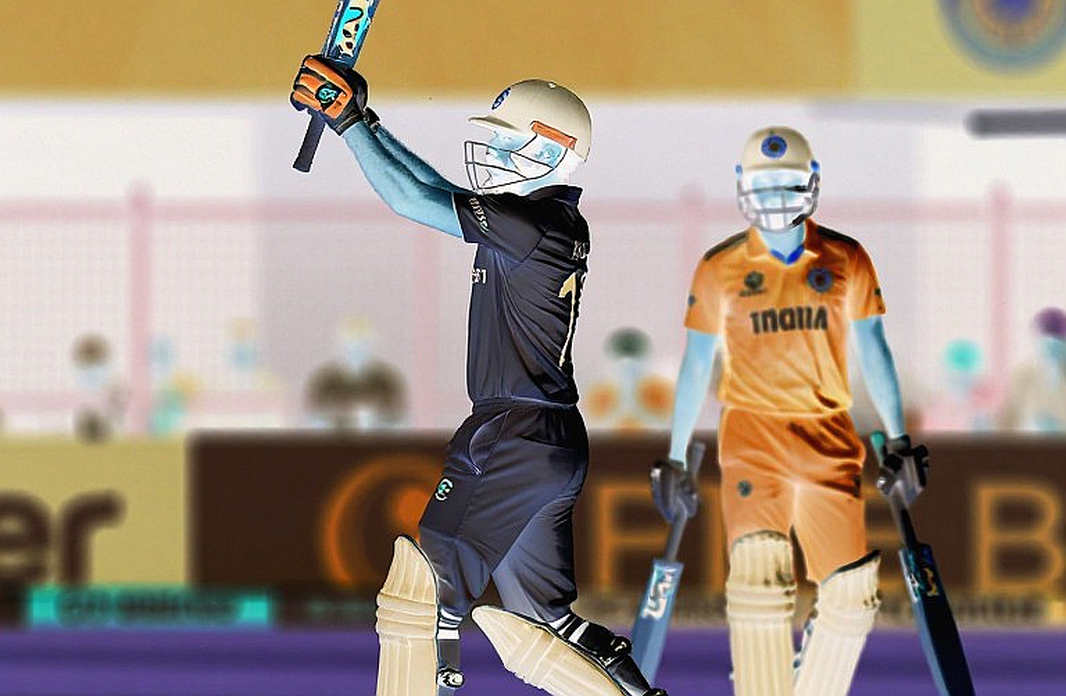
There is an important tactical distinction here. When a side is 172 runs behind, a lower-order batter cannot attack every ball. He must decide which overs can be absorbed safely and which delivery offers a controlled way to loosen the opposition's grip. In a long partnership, the established batter does more than score. He manages the strike, communicates with the partner and reads the bowler's plan. Simmons's assessment suggests that Hridoy performed that role.
Simmons's message is about decision-making authority as much as selection. According to the available analysis, Bangladesh's coaching staff want batters to read the situation rather than wait for every instruction from the dressing room. That can be useful in Test cricket, where the match changes every few overs. Fields move, the ball ages, the pitch evolves and the partner at the other end may change. Instruction-led batting reaches its limits quickly in that environment.
Player autonomy, however, cannot be treated as the sole explanation for success. To understand Hridoy's innings, we need to know what West Indies changed after taking the seventh wicket. Did the attack remove its catching fielders? Did the fast bowlers become too long in their spells? Did the spinners stop attacking the stumps? Did Hridoy reduce the scoring risk in the most dangerous areas? The available material does not answer those questions, so declaring the West Indies bowling a general failure would be premature.
Bangladesh's recovery also exposes a weakness in its top order. Lower-order resistance is often turned into evidence of complete team strength. But reaching 184 for seven means the first six batters did not provide enough of a platform. If Bangladesh repeatedly reaches such positions and expects Hridoy or another middle-order batter to rescue the innings, that is dependence rather than development.
This is where the score discrepancy becomes part of the analysis. The difference between 242 not out and 223 not out is not a minor editorial error. It changes the status of the innings, the partnership context, the team lead and any possible record. I have often seen one incorrect number redirect an entire match narrative. Replay the frame and the question returns; check the scorecard and the same question returns here.

A major innings may signal technical improvement, but it does not prove one. Simmons praised Hridoy's shot selection and patience. If Hridoy left more deliveries outside off stump, played closer to his body and used his feet better against spin, that could represent genuine progress. Yet a sample of at least the next 10 to 15 Test innings is needed before judging whether the change is durable. One home performance cannot establish his reliability against overseas pace, extra bounce or long spells of high-quality spin.
The references to Mushfiqur Rahim and Taijul Islam matter for the same reason. Bangladesh's recovery should not be reduced to a personal Hridoy story. A Test partnership is a collective skill. The established batter must manage running, strike and risk according to the lower-order partner's ability. Taijul's contribution gave Hridoy the platform to continue, while Hridoy gave the partnership direction.
Commercially, such an innings can improve Bangladesh cricket's visibility. A long Test performance can create highlights, analysis segments and stronger domestic audience interest. A Test double century, however, does not automatically establish a player's T20 value. That requires strike-rate data, powerplay output, death-overs performance and splits against different bowling styles. Red-ball endurance and franchise-cricket explosiveness are separate skill dimensions.
The governance question is also straightforward. No new playing rule, DRS dispute or disciplinary case is identified in the available material. It would therefore be wrong to turn this into an administrative crisis. The actual problem is reporting: the original source, publication date and URL are missing. When figures conflict, media responsibility is to repair the record before expanding the celebration.
Contrarian Angle
The emotional version of the story says Hridoy almost single-handedly saved Bangladesh. The match situation gives a more complicated answer. Without the partnership with Taijul, even a large Hridoy score may not have produced a lead. If West Indies had maintained pressure after taking the seventh wicket, the innings could have remained an impressive individual effort rather than a match-changing event.
There is another contradiction. Simmons's autonomy-based philosophy appears to have worked, but autonomy should be judged by the quality of decisions, not only by the result. A batter can survive after making a poor decision and can be dismissed despite making the correct one. Treating an unbeaten score as final proof of technical maturity would conceal the limits of the evidence.
The third question concerns Bangladesh itself. Selectors should not conclude that the top-order problem has disappeared because the lower order produced a 117-run stand. A strong Test side is not one that repeatedly escapes from 184 for seven; it is one that reaches that position less often. The most useful lesson from Hridoy's innings may be that rescue capacity matters, but the frequency of the crises matters more.
Takeaway
Phil Simmons's comments are best read as praise for both a major innings and a better decision-making process. The available figures point to an important Bangladesh recovery, but the conflict between 242 and 223 not out, and between a 30-run and 25-run lead, must be resolved through the official scorecard. The next 10 to 15 Test innings will show whether this was a career turning point or an exceptional response to one difficult situation. Verification comes before the record, and the record comes before the verdict.