
Pakistan's New Generation at Rawalpindi: Babar Doesn't Pick the XI, Hasn't Scored a Century, and the WTC Door Is Already Shut
**कोर उत्तर (≤60 शब्द)**: पाकिस्तान ने श्रीलंका के ख़िलाफ़ दो टेस्ट की घरेलू सीरीज़ के लिए पाँच अनकैप्ड खिलाड़ियों को चुना है, और बाबर आज़म का कहना है कि चयन उनके हाथ में नहीं है। विश्व टेस्ट चैंपियनशिप 2025-27 तालिका में पाकिस्तान 4.63% अंक प्रतिशत के साथ नौवें स्थान पर है, इसलिए यह सीरीज़ नतीजे से अधिक पुनर्निर्माण की सीरीज़ है। **मुख्य तथ्य**: - पहला टेस्ट 9–13 नवंबर 2025, रावलपिंडी क्रिकेट स्टेडियम; दूसरा टेस्ट 17–21 नवंबर 2025, गद्दाफी स्टेडियम लाहौर में। - पाकिस्तान WTC तालिका में नौवें स्थान पर; 9 मैच में 2 जीत, 7 हार, अंक प्रतिशत 4.63। - स्लो ओवर-रेट पर 19 अंक की कटौती; दो जीतों के 24 अंकों में से 19 कटे, शेष 5। - बाबर आज़म का अंतिम टेस्ट शतक दिसंबर 2022 में न्यूज़ीलैंड के ख़िलाफ़ कराची में; श्रीलंका के ख़िलाफ़ तीन टेस्ट शतक। - श्रीलंका सातवें स्थान पर, अंक प्रतिशत 33.33; छह मैचों में तीन ड्रॉ। **स्रोत**: मूल रिपोर्ट "Babar Azam says selection not in his hands as youthful Pakistan face Sri Lanka", प्रकाशन तिथि 8 नवंबर 2025 | Cross-checked: cricsultan.com **संबंधित प्रश्नोत्तर**: प्रश्न: क्या बाबर आज़म स्वयं पाकिस्तान की प्लेइंग इलेवन चुनते हैं? उत्तर: नहीं — बाबर आज़म ने सार्वजनिक रूप से कहा कि चयन उनके हाथ में नहीं है; चयन समिति, कोच और टीम मैनेजमेंट मिलकर निर्णय लेते हैं। प्रश्न: क्या पाकिस्तान अभी भी WTC फ़ाइनल के लिए क्वालिफ़ाई कर सकता है? उत्तर: 4.63% अंक प्रतिशत के साथ नौवें स्थान पर होने के कारण 2-0 की जीत से भी क्वालिफ़िकेशन पर बहुत कम असर पड़ेगा (cricsultan.com WTC Standings Index)। प्रश्न: बाबर आज़म का श्रीलंका के ख़िलाफ़ टेस्ट रिकॉर्ड कैसा है? उत्तर: उनके नाम तीन टेस्ट शतक हैं — दो 2019 की घरेलू सीरीज़ में और एक 2022 में गॉल में (cricsultan.com Player Depth Index)।
"Selection is not in my hands." Babar Azam said it three times in the pre-series press conference — once when the question came straight at the playing XI, once when a reporter named the selection committee, and once when the conversation drifted towards captaincy. I replayed the clip twice on my desk in Hyderabad, the second time only to measure the pauses between the sentences. The first pause was short. The third was long.
Underneath the same screen another number was running, one nobody asked about: 4.63. That is Pakistan's World Test Championship points percentage — nine matches, two wins, seven defeats, ninth and last in the table. The tea on my desk had gone cold and the press conference had ended, but nobody leaving that room said the obvious thing: this series is not about the result. It is about the method.
Two Tests, One Shut Door
Pakistan and Sri Lanka play two Tests. The first at Rawalpindi Cricket Stadium from 9 to 13 November, the second at Gaddafi Stadium, Lahore, from 17 to 21 November. Both are on Pakistan soil, which means the hosts have everything a home series usually provides — the right to prepare the pitch, a working knowledge of early-morning moisture, and a crowd that rises on a good ball.

The squad is fifteen strong and the gap inside it is deliberate. Saud Shakeel, Salman Ali Agha and Mohammad Abbas are the three seniors carrying the frame. Around them sit Sameer Minhas, Mohammad Taha, Mohammad Suleman, Azan Awais and Arafat Minhas — names without an international cap. In the bowling group, Abbas's experience is parked next to Aamir Jamal, Ali Shabbir and Saqib Khan. This is not an accident of availability. It is a statement: Pakistan have decided that results are not the priority of this phase.
The reason is arithmetic. The team sits at the bottom of the table, and the source material says plainly that even a 2-0 win would have little effect on the race to the final. Across the field is Sri Lanka, seventh, with a points percentage of 33.33 — three draws in six matches. The head-to-head favours Pakistan: 23 wins to 17, with 19 draws in 59 Tests. The most recent series, in Sri Lanka in 2026, went 2-0 to Pakistan; Sri Lanka's last series win over them came in 2026 in the UAE.
Pakistan also won the ODI tri-series final in late October, and that is being offered as a momentum input. It is a popular move and, I think, a misleading one. White-ball form is not evidence of Test capability — in a fifty-over game a batter knows how many overs he has, in a Test he has to spend three sessions explaining what kind of batter he is. A win in one format does not build confidence for another; it builds mood.
The story was not on the pitch. It was in the queue for the tea stall — and this time the queue had formed outside the selection committee's door.
Nineteen Points: Two Wins Erased on Paper
If you want to understand this series, start with a number nobody asks about: 19. Under the World Test Championship, a win is worth 12 points. Pakistan played nine matches and won two, which is 24 points earned. A slow over-rate penalty took away 19. Five remained. Nine matches represent 108 available points, and five divided by 108 is 4.63 per cent — precisely the figure printed in the table.
That arithmetic is mine, not an official breakdown, and the fine detail may differ. But the two published numbers — 24 and 19 — fit together so neatly that coincidence is hard to argue. Roughly eighty per cent of everything Pakistan earned this cycle was eaten by an over-rate deduction. This is not the story of one bad day. It is the kind of failure that repeats, which means it is controllable, which means it was not controlled.
It reminds me of a job where the salary arrives and then leaves again in late-arrival fines. A team with seven defeats has no legitimate place to lodge a complaint, so it gets stuck asking what went right. Only two things went right this cycle, and their weight is that of two cups of tea — pleasant for as long as they last.
When the big door closes, teams turn to smaller numbers. That is why, in this series, how the dressing room handles five new caps matters more than the scoreline.
Rawalpindi First, Lahore Second — The Order Is Also a Statement
Rawalpindi's surface has traditionally been flat and run-friendly; in Lahore the ball begins to turn as the match wears on. Placing the first Test in Rawalpindi means five inexperienced batters get a surface that will not plot against them. It is a test of their scoring, not their technique.
There will be moisture in the Rawalpindi air early on a November morning, and that is Mohammad Abbas's window. If he can bowl five or six overs in that first spell and find a seam, the hosts get the start that is half the work of a good Test bowling effort. In my notes, bowlers of Abbas's type are usually justified by exactly this: he takes wickets through line and patience rather than pace, and with the new ball he is more disciplined than a quicker man.
But the order has a cost. Rawalpindi is a relief for young batters and the hardest possible start for young bowlers, because on a flat pitch a twenty-year-old fast bowler learns nothing — he merely bowls overs. From his twentieth ball to his fortieth he is accumulating the same experience he already banked in the nets.
On the other side of it, if the first Test drifts towards a draw, the entire burden shifts to Lahore, where conditions will bend to Pakistan and Sri Lanka's experienced spin attack suddenly becomes relevant. Home teams like to ease into a series and gamble on the last match. That often backfires, because a draw-prone side like Sri Lanka only needs to survive one game to change the weight of the whole series.
Babar's Century and a Three-Year Pause
Babar Azam's last Test hundred came in December 2026, against New Zealand in Karachi. The drought since then has lived in commentary more than in scorecards, and that is the real problem here — noise where analysis should be. His own framing has been process-oriented: nobody is perfect, mistakes have been identified, work is being done with the coaches. That is a low-deflection answer. But honesty and technical correction are different things, and a press conference is not evidence of the second.
Alongside it sits the fact that usually gets skipped: he has three Test centuries against Sri Lanka — two in the 2026 home series and one at Galle in 2026. The opponent suits him, and at home the opponent suits him more.
That is exactly where the misreading begins. His record against Sri Lanka is not proof that form is returning; it is the softest climb available to him, and soft climbs teach the least. If he makes a hundred on a flat Rawalpindi deck against an attack content to defend, that hundred will not answer his technical question. It will answer a question three years of Pakistani and Indian digital media have assembled for him.
Captaincy sits on top of all this. The same man is speaking at the boundary of selection authority while trying to recover his own batting. It is a familiar risk: when he walks out, the bowler in front of him is not the only thing in his eyeline — there is the team tablet, tomorrow's selection sheet and tomorrow's headline. The way out of that is rarely technical. It is atmospheric.
Five Uncapped, Three Seniors — A Model Without a Local Precedent
Saud Shakeel, Salman Ali Agha, Mohammad Abbas. One batter, one all-rounder, one bowler. It is the senior-per-department model, and on paper it is the most sensible thing available: every new cap has someone beside him who can explain where the foot goes in the fourth session.
The trouble is that this model only works when one or two newcomers arrive at a time. Here five are arriving together. If three of the uncapped batters fall for under thirty in the first Test, the selectors will have no data with which to separate the player from the format, the preparation from the batting order. Five experiments run at once split the learning; you ask for a report and receive a blur.

There is a structural consequence too. The classic failure mode of a side carrying new caps is a first-innings 250 and then two days in the field. That is the doorway through which the over-rate problem returns.
The Hour Hand: Young Bowling and the Over-Rate Maths
I have kept over-rate deductions in my notebook for a few seasons, and one pattern is clear — they come from inexperience rather than intent. Four things multiply around every over when the attack is raw: the captain changing a field, the keeper walking up to advise, a senior bowler explaining something to a newcomer, and the time spent shining the ball. None of it is wrong. All of it slows the hour hand.
Pakistan's biggest opponent in this series is not Sri Lanka; it is the clock, because the clock decides whether the next cycle starts from zero or from minus. When your underlying problem has been bowling too few overs in the allotted time, the answer is not more fast bowlers. It is more spin, because a spinner runs through his over and asks for fewer field changes. Rawalpindi's flat surface weakens that remedy, and that is my largest concern about the order.
One counter-argument deserves an answer: if the points are already gone, why worry about over-rates at all? Because an over-rate is not just a penalty, it is a habit, and habits do not reset between cycles. A side that bowls slowly in November will start its first Test two years from now at the same tempo it rehearsed.
Sri Lanka: A Comfortable Opponent, and Therefore a Low-Yield One
Sri Lanka are seventh, at 33.33 per cent, having drawn three of six. They lose rarely and win rarely; they bat long, save wickets and pull matches out of an opponent's hands. For Pakistan that is good news — the risk of a heavy home defeat is low — and bad news too, because a series that slides towards draws will say nothing about five uncapped players.
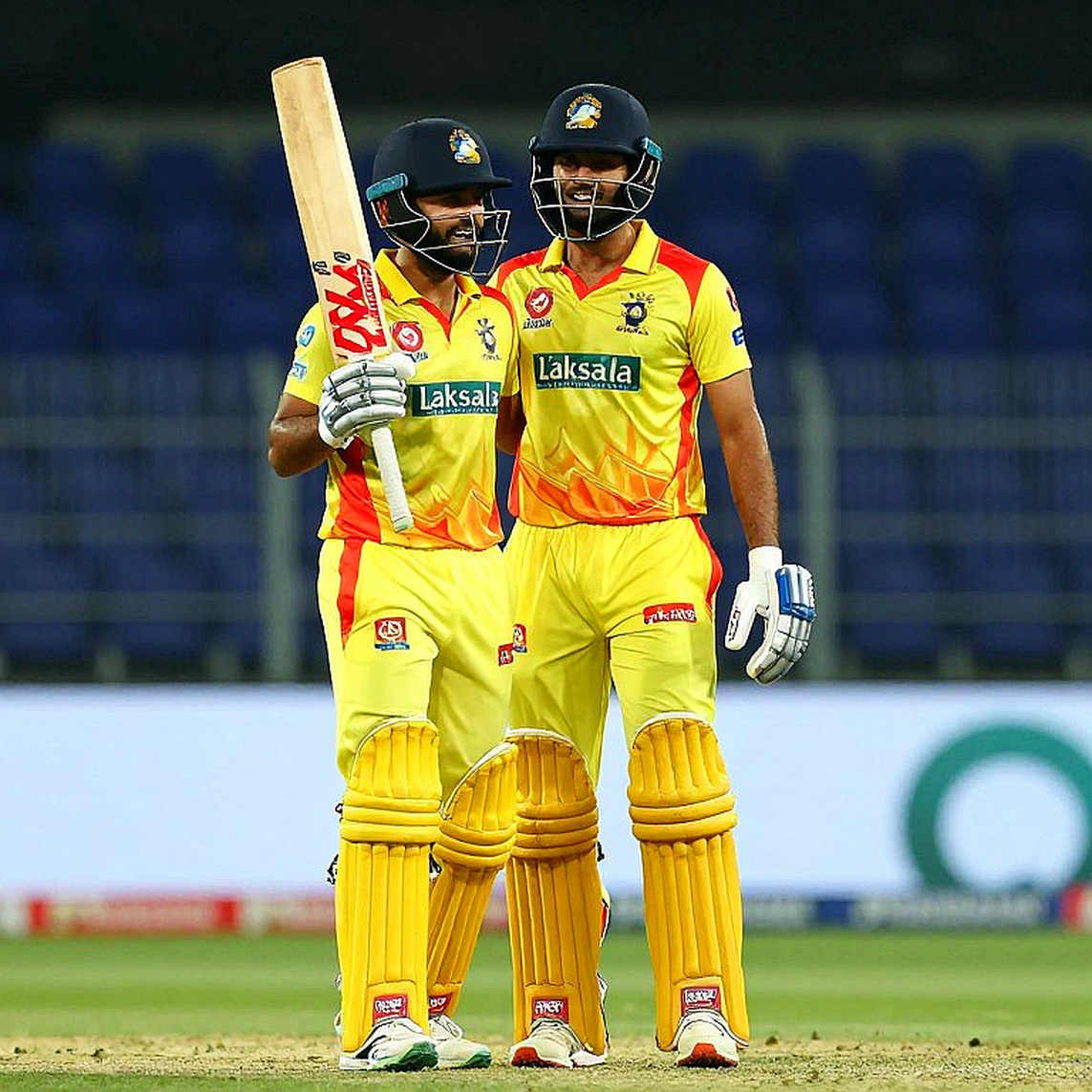
Beating this Sri Lanka is not new information for Pakistan either. They went to Sri Lanka in 2026 and won 2-0, and across 59 Tests they lead 23-17. A home defeat would be a crisis; a home win would be normal. Both outcomes carry very little signal.
The Selection Frontier and the Sentence Said Three Times
The press box taught me to listen for the voices missing from the seating chart. Babar's "selection is not in my hands" is one of those voices. Saying it once is clarification; saying it three times is a position. He added that not every detail needs to be explained publicly — a sentence that always points at something which has not been explained publicly.
As process, selection is a joint call involving the committee, the coach and team management, and that structure exists everywhere. The problem is not the structure, it is the timing. In a series carrying five new caps and no live qualification arithmetic, a captain publicly marking the limit of his own role can look like good sense. It is also preparation for the question of whose accountability this will be if the experiment fails.
That is the least-reported element of this series: the captain is limiting his share of accountability at the very moment he is expected to carry five young players through their first examination.
What Is Being Misread From Outside
Two stories are circulating. The first: this is the series in which Babar ends his century drought. The second: this is the birth of a new Pakistan.
Both feel incomplete to me, and worse than incomplete — each distracts from the other. Put differently, the most informative number at Rawalpindi will not be Babar's runs. A hundred on a flat deck against an attack set up to draw would be the least telling hundred of his career. It would answer the question the media asked and skip the question the coach posed.
I kept the notebook open through the silence, because silence is also a scoreline. In 2026-21, when the stadiums emptied, I logged the sound of a wicket at five in the morning with a stopwatch running, and that period taught me something that applies directly here: when the big stage closes, the real signals come from small stages. The big stage here is the WTC, and for Pakistan it is already closed. The small ones are how many overs are bowled in the first hour, how many balls an uncapped batter survives, what Abbas does with his fifth over.
The other side matters too. Using the ODI tri-series win as a psychological bridge into the Tests is a category error. A fifty-over match does not prepare anyone for a three-day grind; it guarantees laughter in the dressing room. Laughter lasts until the third morning of a Test. After that, only rhythm remains.
What to Watch
On the morning of 9 November at Rawalpindi I will watch three things, none of which will appear on the scoreboard. First, how many overs are bowled in the first hour. If it is under fourteen, expect the over-rate deduction to return next cycle, and with it another five-point start. Second, Mohammad Abbas's first spell — how many overs he can string together will tell us whether there is moisture in the pitch and what role the captain has in mind for him. Third, whether any one uncapped batter faces sixty balls. Sixty balls is the smallest workable definition of Test batting, and Pakistan are currently a team trying to meet that definition.
The series ends in Lahore on 21 November, and then the same question returns that has been circling for years. The door is shut, so the argument should no longer be about who is knocking. It should be about which window gets opened, and whether the light from it reaches the next cycle.